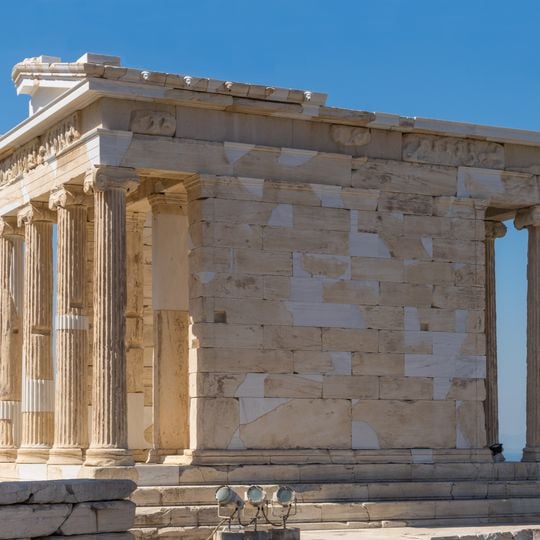
Temple of Athena Nike, Ancient Greek temple at the Acropolis, Greece
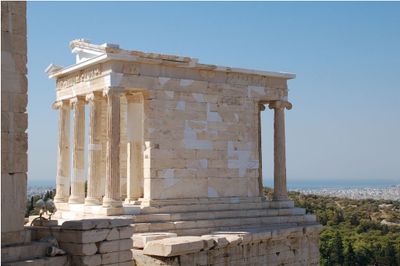
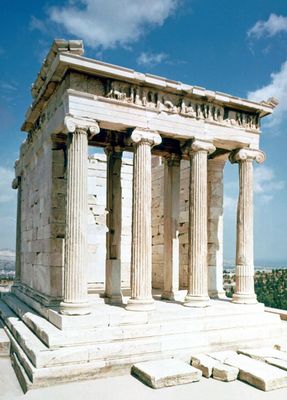
This small structure occupies the southwest edge of the Acropolis plateau, presenting four Ionic columns on each narrow end carved from pale Pentelic marble. The inner chamber opens eastward, while surrounding friezes display battle scenes and deity figures in dynamic poses.
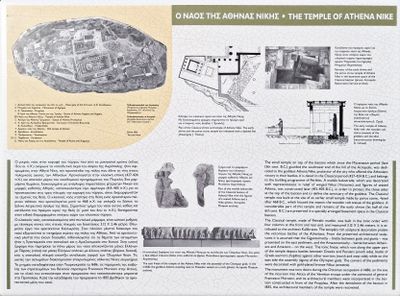
Architect Callicrates designed the building around 425 BCE as the first entirely Ionic shrine on the Acropolis. Ottomans later incorporated it into a fortress bastion before its restoration during the 1800s.
Worshippers honored Nike as a wingless deity at this site, believing the form would keep her bound to the city forever. Carved reliefs around the structure show robed women kneeling and carrying offerings, preserving the craftsmanship of ancient sculptors who worked the stone with delicate precision.
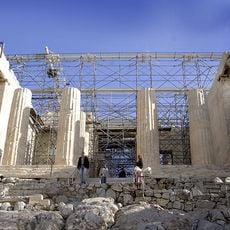
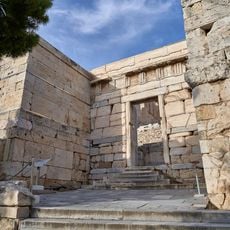
The shrine sits directly beside the main gateway into the Acropolis complex and remains visible from all major monuments around the plateau. Visitors can walk around the structure to view the friezes from different angles, though access to the platform may vary depending on ongoing restoration work.
The cult statue inside held a pomegranate in one hand, an unusual choice for a victory goddess. Archaeologists later discovered this fruit served as a symbol of community and lasting unity in Athens.
The community of curious travelers
AroundUs brings together thousands of curated places, local tips, and hidden gems, enriched daily by 91,067 contributors worldwide.