Athens Klepsydra well, Archaeological spring at the northwest slope of Acropolis, Greece
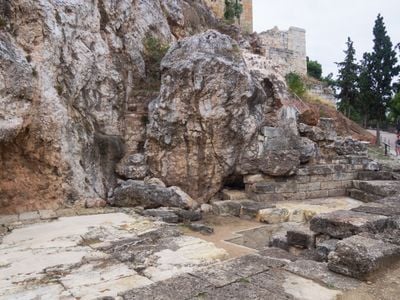
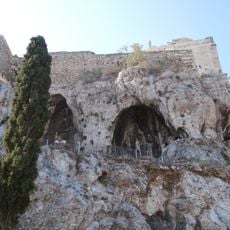
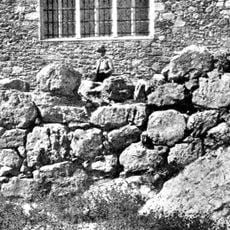
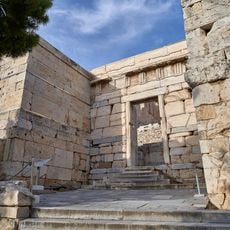
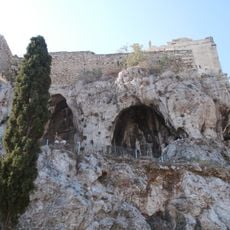
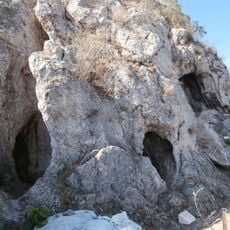
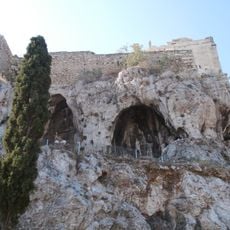
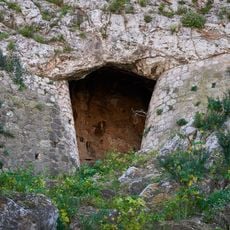
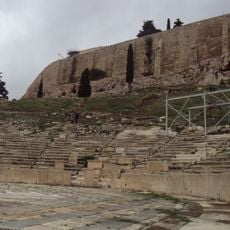
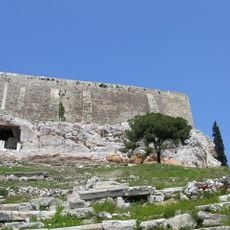
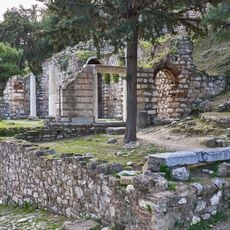
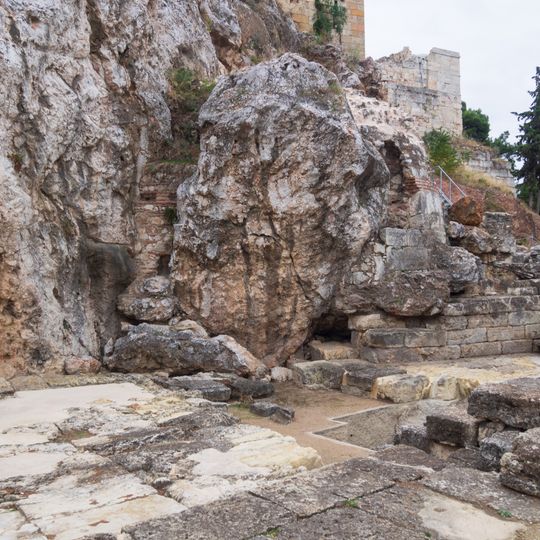
The Klepsydra spring is a stone-built water house at the northwest slope of Acropolis, fed by natural springs flowing from a cave above. The rectangular chamber was designed with an L-shaped platform and carved stairway, allowing people to collect water directly from ground level into the reservoir below.
The spring was used from prehistoric times; the paved court and fountain house were built no earlier than 475–470 BCE, set into a natural cave. A collapse in the mid-1st century BCE and a second one in the mid-1st century CE made the spring inaccessible, so a shaft was cut from the Acropolis and a new well house built in Roman times. The spring was rediscovered by Kyriakos Pittakis, who published the first account in 1835.
Ancient authors knew the spring as Empedo, named for an Attic nymph; Klepsydra referred to the water made available by the fountain house. Hesychius records the older name, and Aristophanes mentions the spring in The Birds. Pausanias, descending below the Propylaea, noted a spring and nearby a sanctuary of Apollo in a cave.
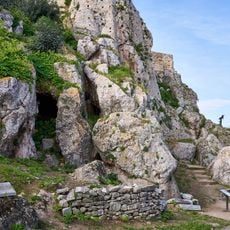
The site is accessed by stone-carved steps located near the ancient Panathenaic Way in central Athens and is easily reached on foot. The compact location makes it possible to combine with nearby archaeological sites when visiting the Acropolis area.
The spring house features an unusual L-shaped platform that allowed people to draw water from multiple levels within the same structure. This design was a clever solution for water distribution across the hillside terrain.
The community of curious travelers
AroundUs brings together thousands of curated places, local tips, and hidden gems, enriched daily by 92,859 contributors worldwide.