Temple of Aphaea, Ancient Greek temple in Aegina Municipality, Greece.
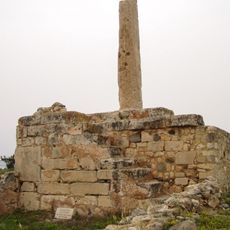
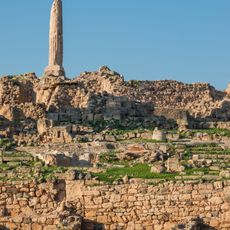
The Temple of Aphaea is a Doric peripteral temple of local poros limestone on a three-stepped base, measuring 13.77 by 28.81 m, with six columns on the short sides and twelve on the long ones; 24 of its 32 columns survive. The pale beige, fluted columns carry a plain architrave, and several are broken or missing, opening onto the dark interior. It stands on a c. 160 m peak in the northeast of Aegina.
The site was built during the late Archaic period and replaced an older sanctuary destroyed by fire. The location had already been a place of worship for centuries before the reconstruction, as finds from earlier periods reveal.
The name Aphaia comes from a Cretan goddess identified with Diktynna or Britomartis, who fled to Aegina and vanished in a sacred grove; locals found a statue in her place and called her Aphaia, "the unseen". Her original name form was Apha. Pausanias mentions the sanctuary, and before inscriptions were found it was taken as a shrine of Athena or Heracles.
Access follows a paved road heading northeast from the port town, winding through pine forests. The site is mostly level and easy to walk, though it offers little shade on hot days beyond the tree line surrounding the hill.
The pedimental sculptures dug out in 1811 by Cockerell and von Stackelberg were sold to Crown Prince Ludwig of Bavaria and reached Munich in 1828, where they are shown in the Glyptothek; fragments remain in Aegina's museums and on site. The temple's columns lean slightly inward, and the corner ones are thicker than the rest.
The community of curious travelers
AroundUs brings together thousands of curated places, local tips, and hidden gems, enriched daily by 94,242 contributors worldwide.