Temple of Apollo at Aegina, Doric temple ruins at Kolona, Aegina, Greece
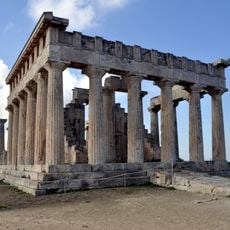
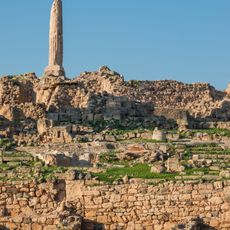
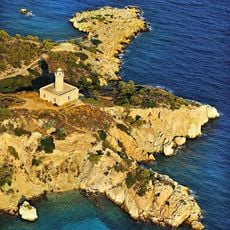
The Temple of Apollo at Aegina is a ruined Doric peripteral temple near the island's main harbor. Its foundations measure about 18.75 by 34.28 meters, slightly larger than those of the Aphaea temple. Of the original 6 by 11 or 6 by 12 columns, only one incomplete column of the opisthodomos remains standing, giving the site its name, Cape Kolona.
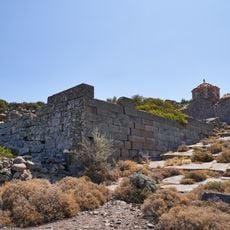
The visible remains belong almost entirely to a Doric peripteros built between 520 and 510 BCE, possibly replacing an earlier temple of the early 6th century BCE. The date of its destruction is unknown; a Venetian-era map already names the site Cap de Conon, likely a corruption of Cap de Colonne. In the winter of 1828–1829 the American doctor Samuel Gridley Howe had refugees dismantle what was left to build a new harbour mole, leaving only the foundations and one column.
Pausanias named the temple first in his description of Aegina, and later travellers wrongly assigned it to Aphrodite, Artemis, Hecate or Athena. The site gave its name to the headland of Kolona, attested since the 16th century, and to the surrounding quarter. Excavations in 2024 uncovered the remains of a Bronze Age purple-dye workshop beside the temple.
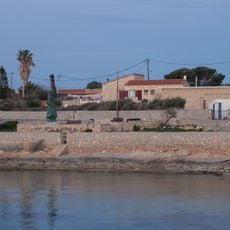
The site sits on a rise that is easy to reach from the harbor area, with views across the town and water. Morning visits offer the best light for photographs and a quieter experience with fewer crowds.
The cape and the surrounding quarter are called Kolóna after the single surviving column, a name attested since the 16th century. On a Venetian-era map the site appears as Cap de Conon, probably a corruption of Cap de Colonne, which shows the temple was already in ruins by then.
The community of curious travelers
AroundUs brings together thousands of curated places, local tips, and hidden gems, enriched daily by 92,856 contributors worldwide.