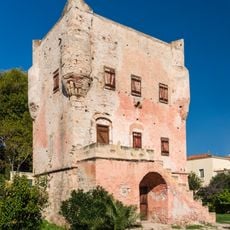
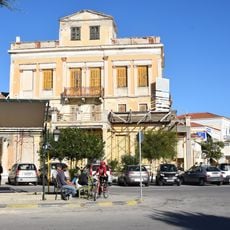
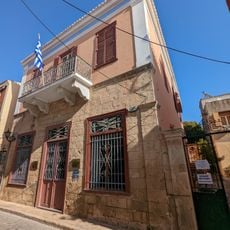
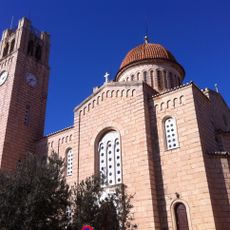
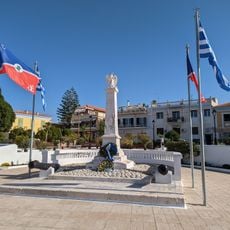
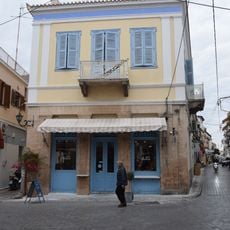
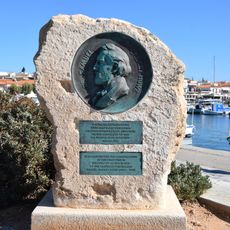
Kapodistriako Orphanage, Protected heritage building in Aegina, Greece.
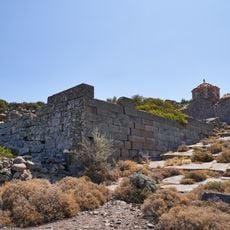
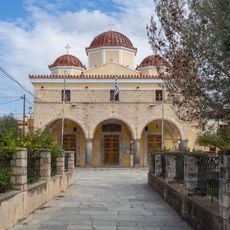
The Kapodistriako Orphanage is a stone building begun in spring 1828 on land given by the Dimogerontia of Aegina, with a church inside its plot; both were finished in June 1829 by engineer Theodoros Vallianos at a cost of 515,371 grosia. It held twelve rooms for thirty children each, 360 in all, and at times housed up to five hundred.
The orphanage was founded in 1828 during Greece's early independence period under Governor Ioannis Kapodistrias, who sought to establish formal care systems. It represented one of the first organized efforts to provide shelter and education to orphaned children in the newly formed nation.
The orphanage ran mutual-teaching schools where older pupils taught younger ones, plus workshops in printing, lithography, watchmaking, shoemaking, tailoring, carpentry, metalwork and bookbinding. Each trainee left with tools and a small sum to start his trade. It also had the first youth choir and orchestra, and a gymnasium with equipment.
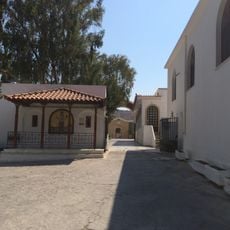
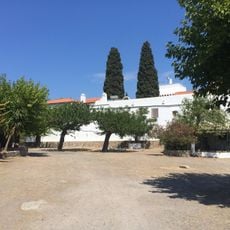
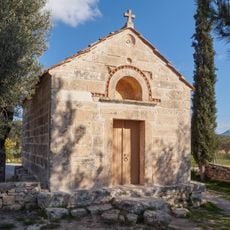
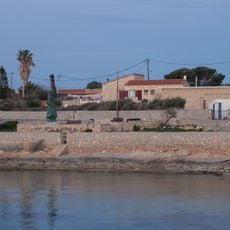
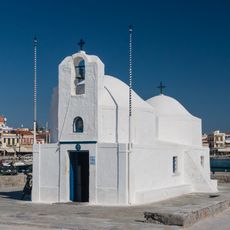
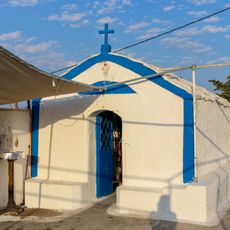
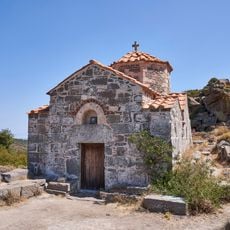
The building stands on the outskirts of Aegina town, on the plot donated by the island's Dimogerontia. It is a protected building, so visits concern the exterior and the site rather than furnished interiors. The church founded within the plot in spring 1828 bears a foundation inscription naming Governor Kapodistrias.
The foundation stone carries an inscription stating that Governor Kapodistrias dedicated the church on the site to the God who saved Greece. The engineer was Theodoros Vallianos, a member of the Engineers corps and of the Tsar's bodyguard, and construction cost 515,371 grosia. The first children arrived in March 1829, about 500 orphans from Poros and Nafplio, some ransomed in Alexandria with money from King Charles X of France.
The community of curious travelers
AroundUs brings together thousands of curated places, local tips, and hidden gems, enriched daily by 93,468 contributors worldwide.