Archaeological Museum of Thessaloniki, Archaeological museum in central Thessaloniki, Greece.
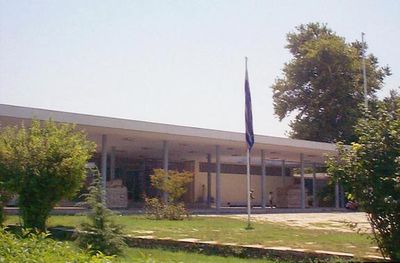
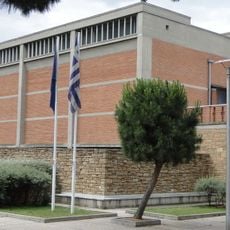
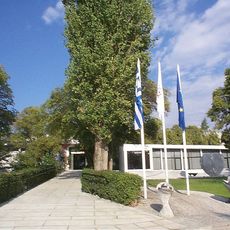
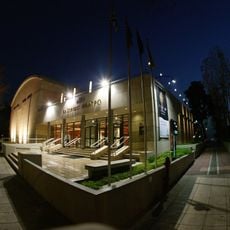
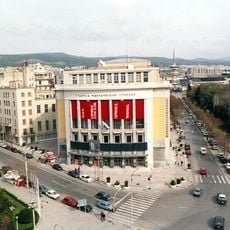
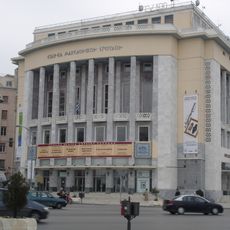
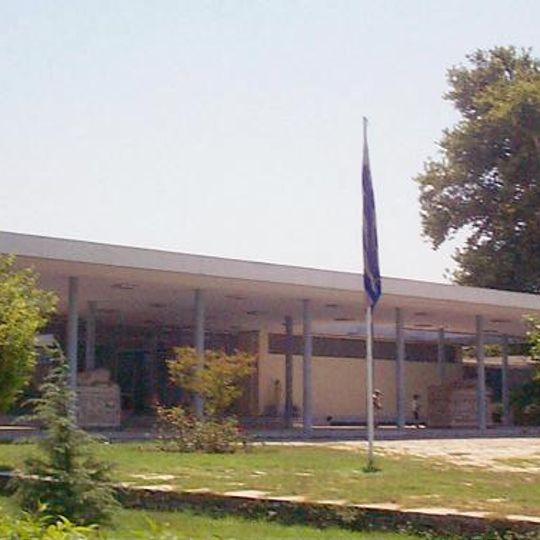
The Archaeological Museum of Thessaloniki is a museum in Thessaloniki, Central Macedonia, Greece. Its building, designed by architect Patroklos Karantinos, opened in 1962 and gained a new wing in 1980. Eight exhibition sections present finds from prehistoric, Archaic, Classical, Hellenistic and Roman times, mostly from Thessaloniki and the wider Macedonian region.
The building was completed in 1962 and shows the modernist style typical of that era. It underwent a major renewal in the early 2000s to meet current standards for visitors.
The museum's eight permanent sections are named in Greek, among them "The Gold of Macedon", "Memory and Stones" and "Macedonia: from mosaics to pixels". In the Gold of Macedon display, finds from cemeteries at Sindos, Derveni and Agia Paraskevi illustrate gold jewellery, gilding and coinage and the burial customs they served, from the 6th century BC to 148 BC.
The museum stands on Manoli Andronikou Street near the city's International Fair grounds, a short walk from the seafront. The entrance portico shelters two marble Attic sarcophagi of the 2nd–3rd century AD, carved with Orpheus, Amazons and the Calydonian boar hunt, so look at them before going in. The lower floor holds the prehistoric collection, reached by stairs or lift.
Two marble sarcophagi stand in the portico before the entrance, carved in Attic workshops of the 2nd–3rd century AD with Orpheus, Amazons and the Calydonian boar hunt. One carries a curse inscription: whoever opens or moves it must pay a fine to the sacred treasury and the city.
The community of curious travelers
AroundUs brings together thousands of curated places, local tips, and hidden gems, enriched daily by 92,887 contributors worldwide.