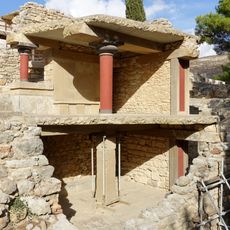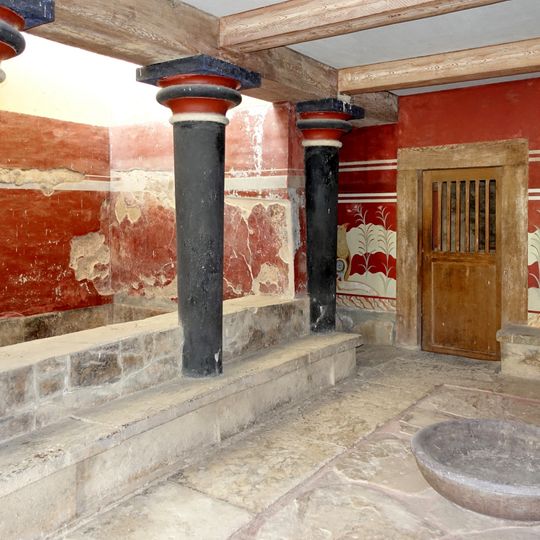
Throne Room, Knossos, Archaeological ceremonial chamber in Knossos, Greece
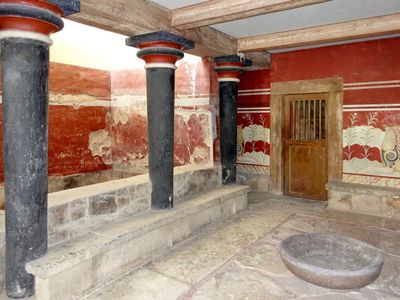
The throne room at Knossos is a ceremonial chamber featuring a limestone throne set against a red wall, with double doors and stone benches along three walls. The space contained painted wall decorations showing griffins and other motifs throughout.
This chamber dates to the 15th century BC and represents one of Europe's earliest royal seats. British archaeologist Arthur Evans uncovered and reconstructed it in 1900.
Griffins face the throne in the decorative scheme, showing how political authority and religious ritual were intertwined in Minoan life. The images suggest that rulers conducted sacred ceremonies in this space.
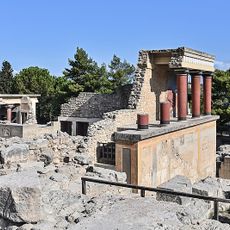
Access to the room comes from the central palace court through a pair of double doors, with a connecting anteroom adding to the layout. Plan time to study the painted details and structural features that form part of the broader palace complex.
The throne itself was crafted from gypsum and shows unusual construction details compared to other ancient royal seats. The accompanying griffins are shown without wings, setting them apart from depictions found in other cultures.
The community of curious travelers
AroundUs brings together thousands of curated places, local tips, and hidden gems, enriched daily by 91,247 contributors worldwide.