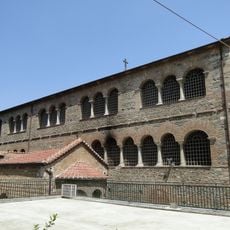
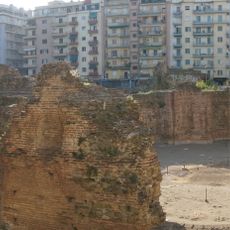
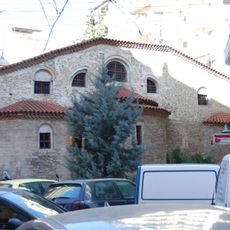
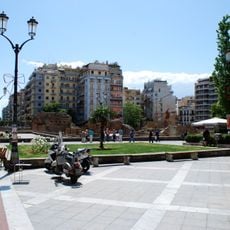
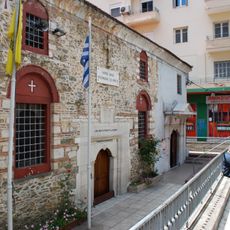
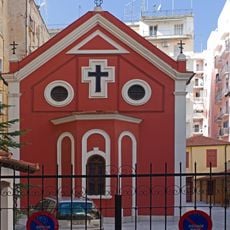
Saint John the Baptist Baptistery, Thessaloniki, Byzantine baptistery in Thessaloniki, Greece.
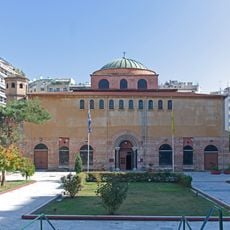
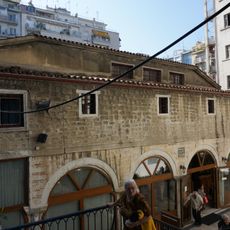
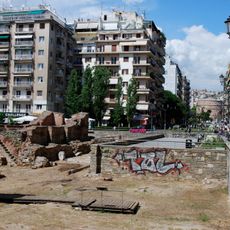
The Baptistery of St. John the Baptist stands opposite the Hagia Sophia in Thessaloniki, part of a five-aisled episcopal basilica completed in the fifth century. Its central room is a quatrefoil hall with platforms and a baptismal font, once reached from a hallway with a mosaic floor. The apse of the early Christian basilica's sanctuary is built into the basement of the modern building east of the church.
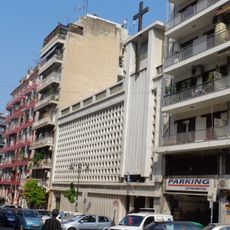
The baptistery belongs to a five-aisled episcopal basilica completed in the 5th century, identified during excavations at the site of Hagia Sophia; the apse of the basilica's sanctuary is built into the basement of the modern building east of the church. The catacomb beneath the modern church of St. John the Baptist was found in 1892 by the landowners; in Roman times it served as a bath furnace for the Stadium. It is traditionally held that St. Demetrios was imprisoned and martyred at the spring.
The baptistery is also known as the Agiasma of John the Forerunner, and its four-conch hall with platforms and a baptismal font sits within a fifth-century five-aisled episcopal basilica. Below the modern church of St. John the Baptist, a catacomb with a holy spring was found in 1892 by the owners of the plot; the spring is fed underground by the city's torrents.
The site sits in central Thessaloniki within walking distance of other religious monuments in the area. You should plan to spend about 20 minutes walking through the interior to view all the chambers and decorative details.
The catacomb beneath the modern church of St. John the Baptist was found in 1892 by the owners of the plot. In Roman times it served as a bath furnace for the nearby Stadium, and today the spring that rises there is believed to mark where Saint Demetrius was imprisoned and martyred.
The community of curious travelers
AroundUs brings together thousands of curated places, local tips, and hidden gems, enriched daily by 93,483 contributors worldwide.