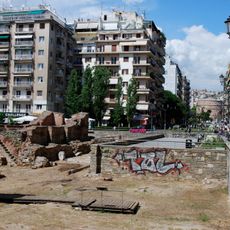
Presentation of Jesus Church, Thessaloniki, church in Thessaloniki, Greece
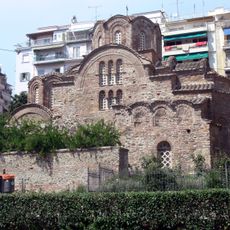
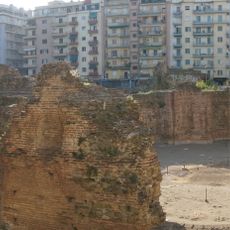
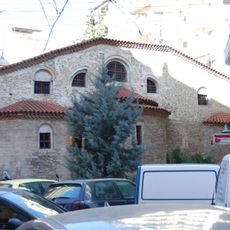
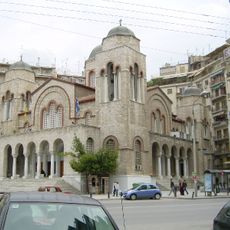
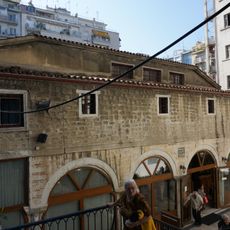
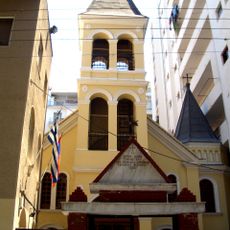
The Presentation of Jesus Church is a three-aisled basilica built in 1841, with a wooden roof and aisles divided by wooden columns. Its horseshoe-shaped wooden gallery extends over the west end and partly into the side aisles. The east wall and the lower parts of the north and south walls mix cut stone with brick, and Roman and Byzantine spolia, including a 1272 inscription, are set into the north wall.
The present church was rebuilt in 1841 on the site of the Kyrio Ioel Monastery, a small foundation possibly dating from the 10th century near the hippodrome. Ruined by 1531, it was restored by the monk Theonas, later Metropolitan of Thessaloniki. The parish took the church by force from the monastery in 1863, and its ownership passed definitively to the parish in 1865.
The church is named for the Presentation of Christ, celebrated on 2 February. Its icons come from different workshops: the 1888 Presentation icon is by Georgios Athanasiou of Galatista, while in 1843–1844 Dimitrios Lambou painted Michael of Thessaloniki and Saint John the Forerunner, and Konstantinos Lambou left several icons of 1844. In the 1890s the Galatista painter Mitakos Hadzistamatis also worked here.
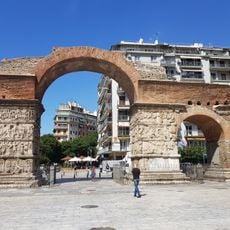
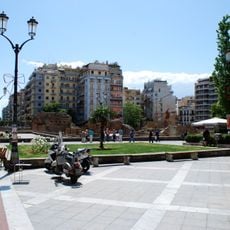
The church stands at the corner of Egnatia and Agapinos streets, directly opposite the Arch of Galerius and Panagia Dexia, so it is easily reached on foot from the city centre. The entrance is on the street side; the interior is a working parish church, so visits are best timed outside services.
The north wall holds marble fragments from Roman and Byzantine sculpture, including part of a 1272 inscription naming a Byzantine officer. The carved wooden furnishings, among them the pulpit and the bishop's throne, date from the 19th century.
The community of curious travelers
AroundUs brings together thousands of curated places, local tips, and hidden gems, enriched daily by 94,143 contributors worldwide.