Rotunda, Archaeological monument and church in Thessaloniki, Greece
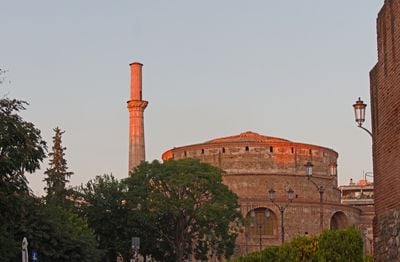
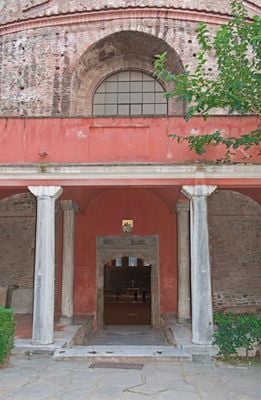
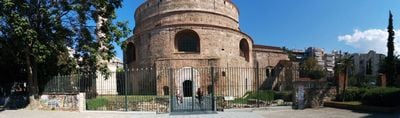
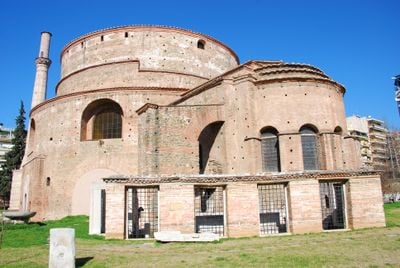
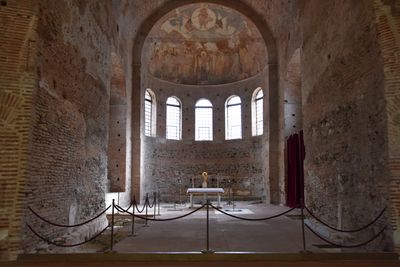
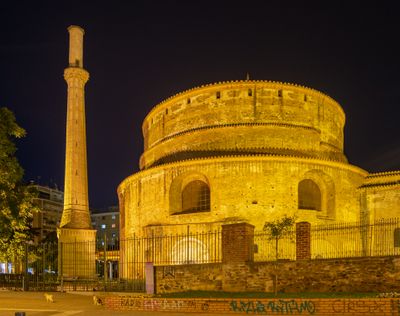
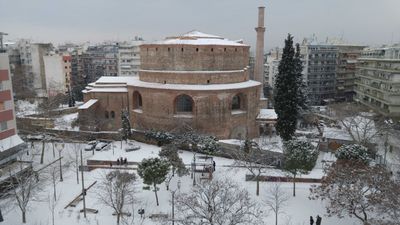
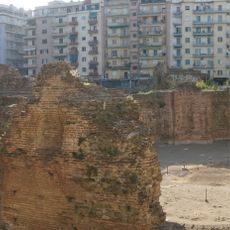
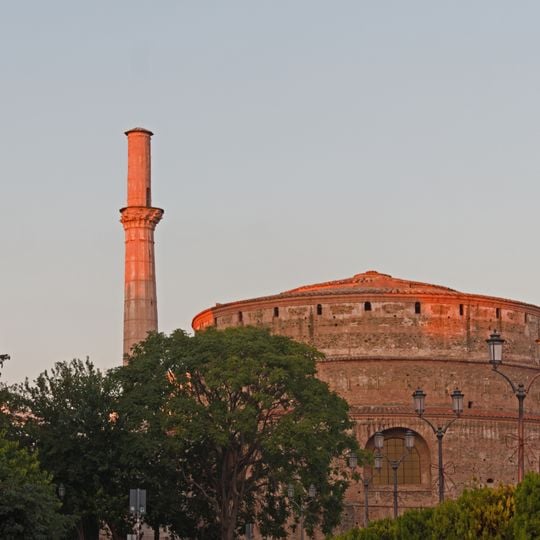
The Rotunda is a cylindrical monument with a large dome and eight arched recesses in Thessaloniki, Greece. The walls reach a thickness of more than six meters and support the weight of the dome that spans the interior space.
Emperor Galerius ordered the construction in 304 as his future tomb, but after his death Emperor Theodosius converted the space into a church. Over the centuries the use changed several times until rulers from the Ottoman Empire turned it into a mosque.
The building takes its name from the circular layout that shapes every part of the interior space. Golden mosaics with saints and angels line the walls, reminding visitors of the community that first worshipped here fifteen centuries ago.
The monument opens from Tuesday to Sunday in the morning and closes in the afternoon, with Monday serving as the weekly rest day. Visitors should wear sturdy shoes, as the floor can be uneven in places and the steps may show wear.
A slender minaret still stands beside the entrance today, recalling the centuries when the building served as a mosque. Archaeologists uncovered Roman graves beneath the floor, suggesting the site was already used for burials before the structure was built.
The community of curious travelers
AroundUs brings together thousands of curated places, local tips, and hidden gems, enriched daily by 91,144 contributors worldwide.