Pylos, Archaeological site in Messenia Prefecture, Greece.
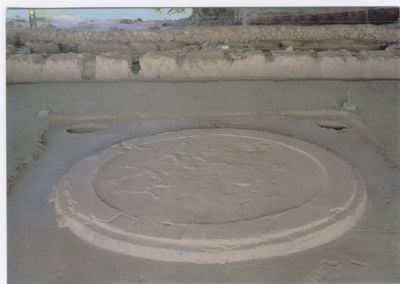
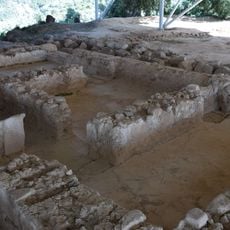
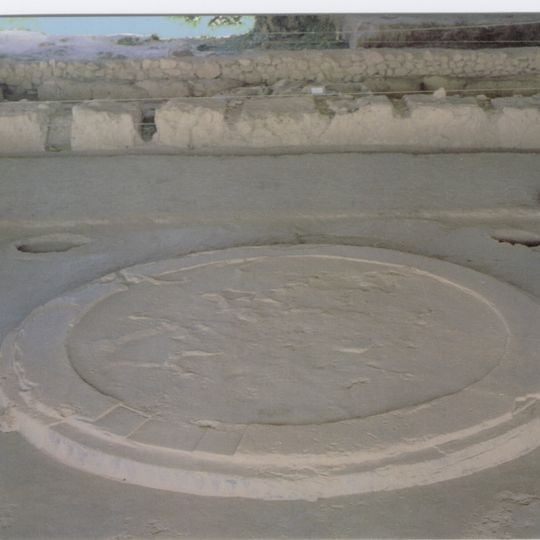
Pylos is the archaeological site at Epano Englianos, about 3 km from the village of Chora in western Messenia, where the Palace of Nestor was excavated in 1955-1958. The hilltop complex, built around the 13th century BC, follows the Mycenaean plan: a central megaron with a hearth, a smaller adjoining megaron, storerooms holding jars for perfumed oil and wine, and wide courtyards with frescoed walls.
The site was a major administrative center during the Late Bronze Age under Mycenaean civilization. Large-scale excavations from the mid-20th century onward uncovered the palace structures and thousands of inscribed clay tablets that reveal details about that ancient period.
The site takes its name from the legendary King Nestor of Greek mythology, who ruled from this palace according to ancient tales. Walking through the remains, you can see how different rooms were arranged to serve administrative, religious, and domestic purposes in a Bronze Age kingdom.
The palace remains lie on the hill of Epano Englianos, about 3 km from the village of Chora and roughly 17 km from modern Pylos. Visitors walk between the excavated rooms on marked paths; the setting is open and exposed, with little shade, so sun protection and sturdy shoes are useful in hot weather.
The Linear B tablets from the palace archive survived because the building burned: the fire baked the unbaked clay, and archaeologists found the tablets in that fired state. The archive holds one of the very few Linear B tablet collections of the Mycenaean world, and these were among the first tablets deciphered by Michael Ventris.
The community of curious travelers
AroundUs brings together thousands of curated places, local tips, and hidden gems, enriched daily by 94,256 contributors worldwide.