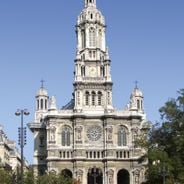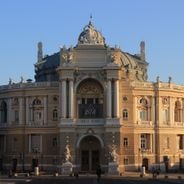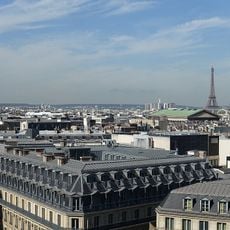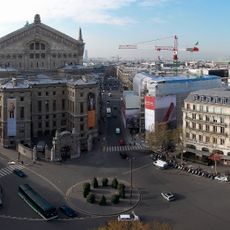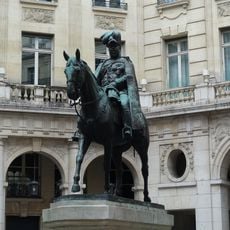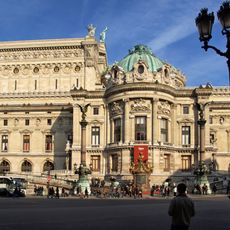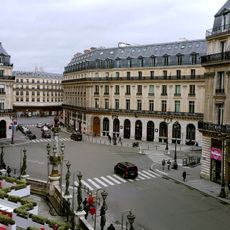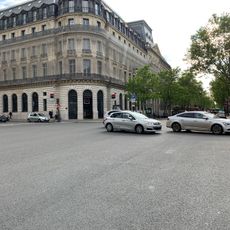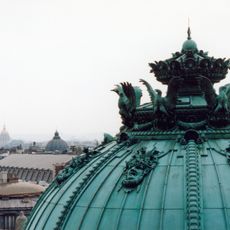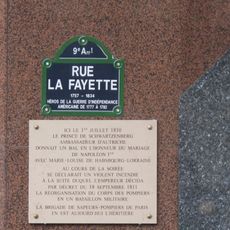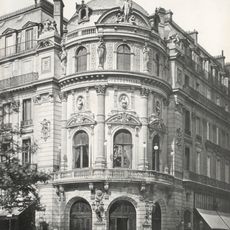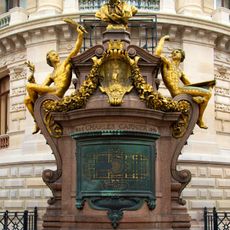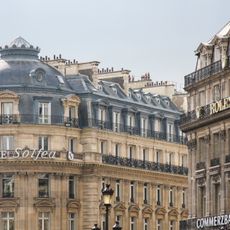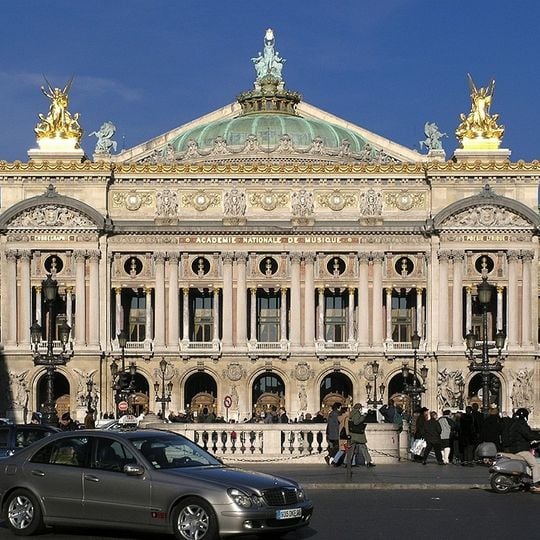
Palais Garnier, Opera house in 9th arrondissement, France
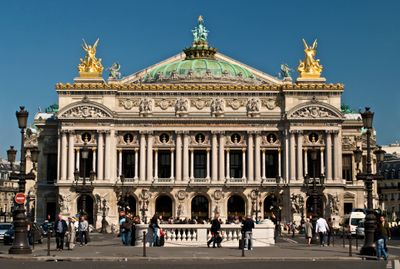
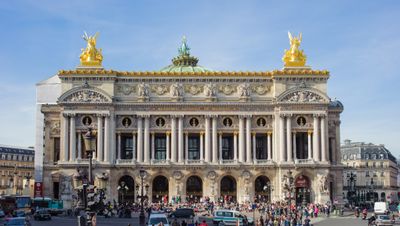
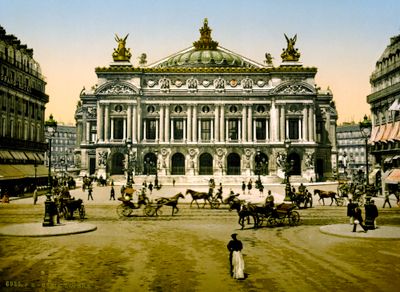
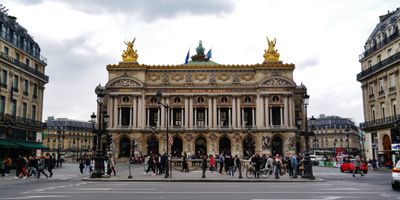
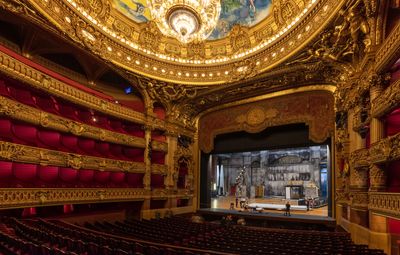
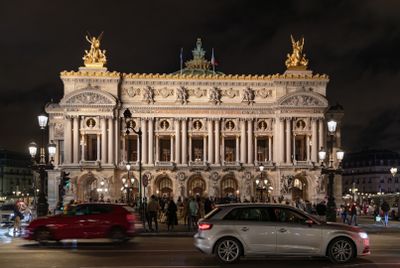
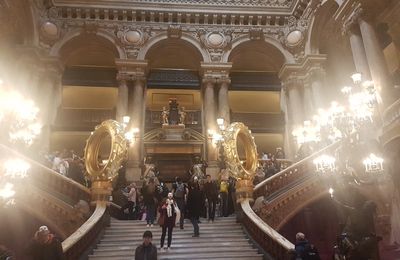
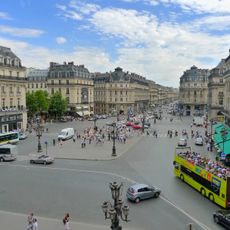
The Palais Garnier is an opera house in the ninth arrondissement of Paris, known for its horseshoe-shaped auditorium and ceiling painting by Marc Chagall. The interior displays wide marble staircases, gilded ornamentation, and red velvet curtains that extend through multiple levels.
Architect Charles Garnier designed this building from 1862 under commission from Napoleon III, and it opened in January 1875. Construction spanned more than a decade, combining stylistic elements of the Second Empire with Beaux-Arts architecture.
Ballet companies and opera singers perform regularly on this stage, which remains a central venue for French musical theater. Visitors can sense the atmosphere of an active theater where rehearsals and performances shape the rhythm of daily life.
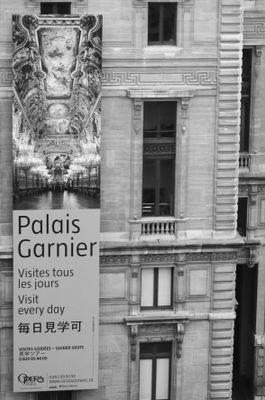
The building sits near several metro stations and opens its doors daily to visitors who can join guided tours through the halls and foyers. It helps to arrive early to avoid waiting times and to view the rooms at a slower pace.
A chandelier weighing eight tons hangs from the center of the ceiling and is held by a system of chains. The underground passages and the lake beneath the building inspired Gaston Leroux to write his novel about the phantom.
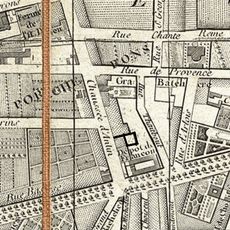
Location: Quartier de la Chaussée-d'Antin
Inception: August 27, 1861
Architects: Charles Garnier
Official opening: January 5, 1875
Architectural style: Second Empire style, Beaux-Arts, eclectic architecture
Capacity: 1900
Accessibility: Wheelchair accessible
Made from material: Euville stone, marble, cast iron
Opening Hours: 10:00-17:00
Phone: +33892899090
Website: https://operadeparis.fr/visites/palais-garnier
GPS coordinates: 48.87194,2.33167
Latest update: December 2, 2025 20:00
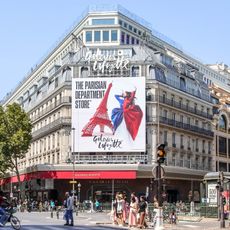
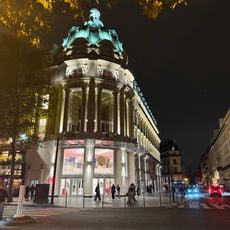
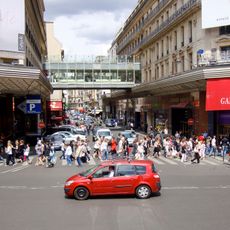
Paris has a collection of remarkable domed buildings that shaped the city's skyline and define how Parisians move through their urban spaces. These structures, built over several centuries, tell the story of how architects learned to cover large areas with glass and metal, creating spaces filled with natural light from above. From grand exhibition halls to religious monuments, from government buildings to shopping destinations, these domes showcase different approaches to the same architectural challenge: how to let light flood into a building while supporting a large roof. The Grand Palais stands as one of the most recognizable examples. Completed in 1900 for the Paris Exposition, this massive building features a glass dome made of metal and iron that rises above the Champs-Elysees. When you walk through it, light pours down from above, creating an open, soaring feeling inside. Today it hosts major art exhibitions and cultural events, drawing crowds who come to see both the shows and the building itself. The dome is so prominent that you can spot it from many points across the city. Other domes throughout Paris tell equally compelling stories. The Pantheon crowns a hilltop in the Latin Quarter with its neoclassical design. Napoleon's tomb sits beneath the Dôme des Invalides, a gold-tipped dome visible from across the Seine. The Sorbonne's dome anchors the university quarter, while the Bourse de commerce, Galeries Lafayette, and Le Printemps department stores brought these architectural forms into the commercial heart of the city. Each dome reflects the era in which it was built and the purpose it was meant to serve, yet together they create a visual thread connecting different neighborhoods and different aspects of Parisian life.
These opera houses represent international music culture. The buildings display architectural styles from baroque to modern. The halls provide optimal acoustic conditions for opera performances. The theaters are located in cities like Paris, New York and Sydney. The buildings function as centers of cultural life in their cities.
Paris combines historic architecture with cultural institutions in ways that have drawn couples for generations. The city offers a mix of 19th-century parklands, bridges spanning the Seine, and street cafes that invite lingering. From the galleries of the Louvre to the cobbled paths of Montmartre, these locations provide opportunities to explore art, history, and urban life together. This collection includes well-known landmarks like the Eiffel Tower and Notre-Dame Cathedral alongside quieter spaces such as Parc Monceau and Square du Vert-Galant. Historic passages like Passage Jouffroy showcase 19th-century commercial architecture, while sites like Palais Garnier and Sainte-Chapelle present medieval and classical building styles. The Canal Saint-Martin and its locks offer views of the city's infrastructure away from main tourist routes. Each location contributes in its own way to Paris's appeal for travelers.
This route covers two millennia of Parisian construction history, showing the architectural layers of the city. It includes Roman remains such as the first-century Lutetia arenas, medieval structures, classical palaces, and modern constructions from the 19th and 20th centuries. Each location documents specific building phases and technical developments in the French capital. The selection ranges from well-known landmarks to less visited historical sites. The 1889 Eiffel Tower stands alongside Roman thermal bath fragments and medieval churches. This collection allows visitors to trace urban development from the ancient settlement of Lutetia to the modern metropolis and compare different architectural styles.
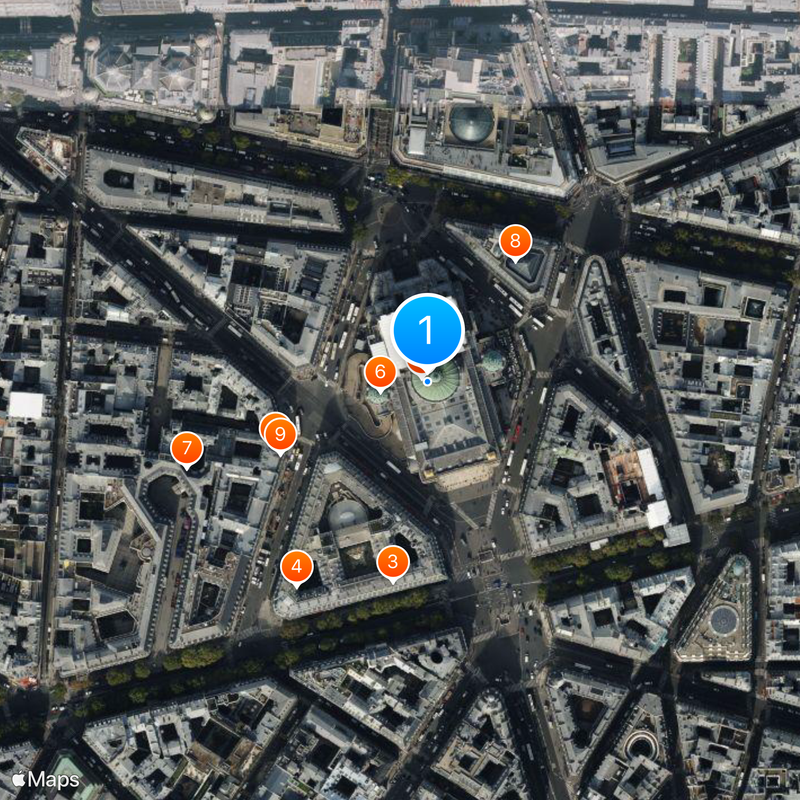
Galeries Lafayette Haussmann
191 m
Palais Garnier
6 m
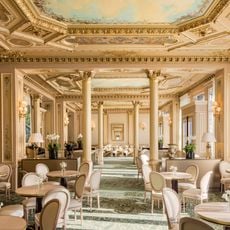
Café de la Paix
141 m
InterContinental Paris Le Grand
169 m
Musée du Parfum
116 m
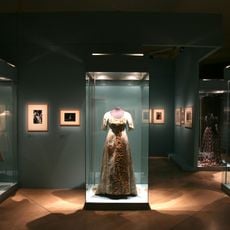
Bibliothèque-musée de l'Opéra
34 m
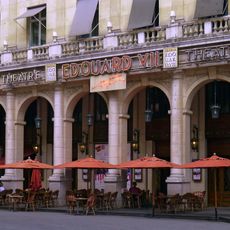
Théâtre Édouard VII
178 m
Société Générale Building
104 m
Hôtel Moreau
154 m
La Terasse des Galeries Lafayette
163 m
Square de l'Opéra-Louis-Jouvet
190 m
Hôtel de Montesson
197 m
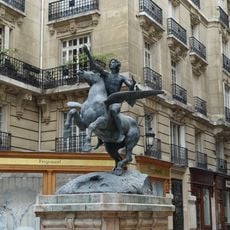
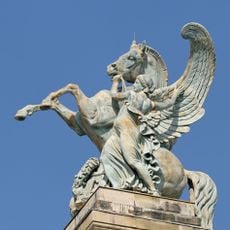
The Poet Riding Pegasus
189 m
Ópera Garnier
61 m
Fame Holding back Pegasus
21 m
Théâtre du Vaudeville
159 m
Monument to Charles Garnier
50 m
9 boulevard des Capucines, Paris
172 m
5 boulevard des Capucines, Paris
174 m
7 boulevard des Capucines, Paris
168 m
23 boulevard des Capucines
195 m
Place Édouard VII
198 m
2-4 rue de la Chaussée-d'Antin, Paris
195 m
Immeubles aux abords de l'Opéra
94 m
4 place de l'Opéra - 11 boulevard des Capucines - 34 rue du Quatre-Septembre, Paris
175 m
16-22 rue de la Chaussée-d'Antin, Paris
156 m
Immeubles situés square de l'Opéra-Louis-Jouvet
190 m
Passerelle des Galeries Lafayette
198 mVisited this place? Tap the stars to rate it and share your experience / photos with the community! Try now! You can cancel it anytime.
Discover hidden gems everywhere you go!
From secret cafés to breathtaking viewpoints, skip the crowded tourist spots and find places that match your style. Our app makes it easy with voice search, smart filtering, route optimization, and insider tips from travelers worldwide. Download now for the complete mobile experience.
A unique approach to discovering new places❞
— Le Figaro
All the places worth exploring❞
— France Info
A tailor-made excursion in just a few clicks❞
— 20 Minutes