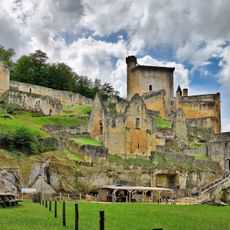
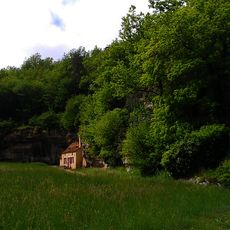
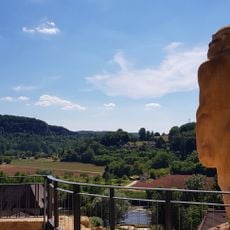
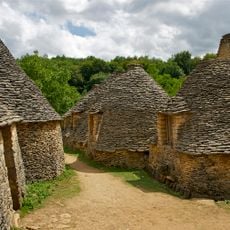
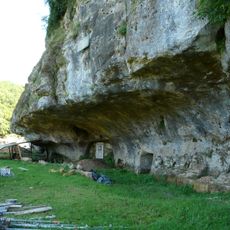
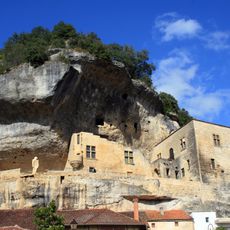
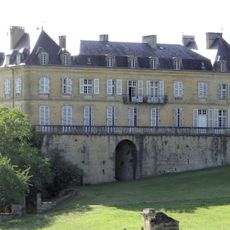
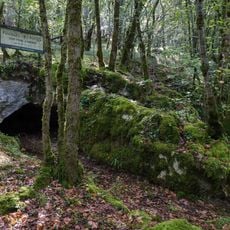
Bernifal cave, Prehistoric cave art site in Meyrals, France
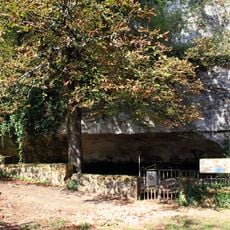
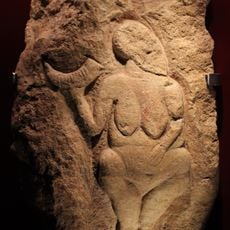
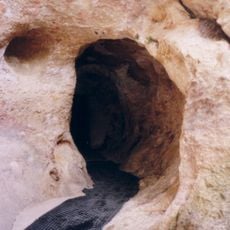
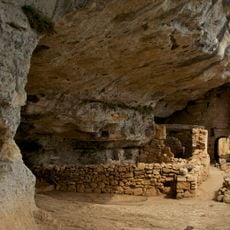
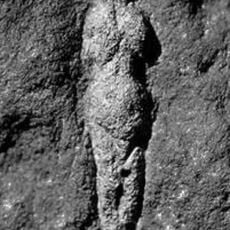
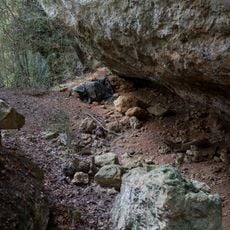
Bernifal Cave is a palaeolithic decorated cave in Meyrals, Dordogne, about 90 metres long with a zigzag layout of two halls linked by a low, narrow passage. Its walls carry 110 paintings and engravings, mostly Magdalenian, dominated by about 24 mammoths, alongside horses, bovines, deer, a human head and 51 signs. Calcite layers and orange iron-oxide stalactites cover parts of the rock.
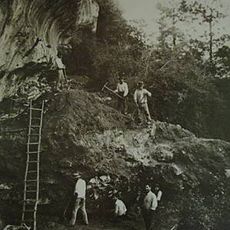
Denis Peyrony entered the cave through an opening in its roof in 1902 and was the first to notice its paintings and engravings; earlier visitors had left graffiti on the walls. Louis Capitan, Henri Breuil and Peyrony published a first study in 1903, and Peyrony cleared the buried original entrance in 1935. The cave has been a classified historical monument since 27 May 1904 and part of the UNESCO Vézère valley listing since 1979.
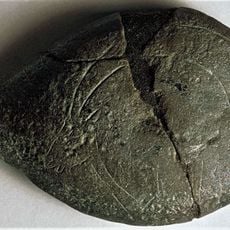
The walls display thirteen tectiform symbols, roof-shaped designs that reveal how Upper Paleolithic people expressed their thoughts and ideas. These puzzling marks appear repeatedly at other prehistoric sites and help visitors grasp what occupied the minds of these early artists.
Access requires advance arrangements with the private owners, and visitors should bring their own lighting since the cave has no electric system. Wearing sturdy footwear is essential for navigating the uneven passages.
One tectiform at Bernifal is made of hundreds of red dots less than a centimetre across, the only known example of this technique. Twelve other tectiforms are engraved and one painted; the painted one shows up best under infrared light. The cave also has a mammoth drawn in clay high in a near-vertical chimney, found only in the 1970s.
The community of curious travelers
AroundUs brings together thousands of curated places, local tips, and hidden gems, enriched daily by 93,852 contributors worldwide.