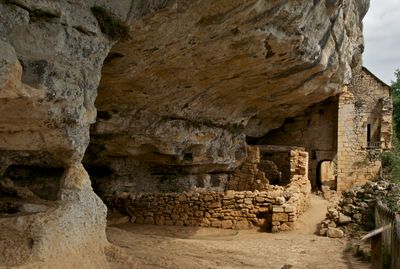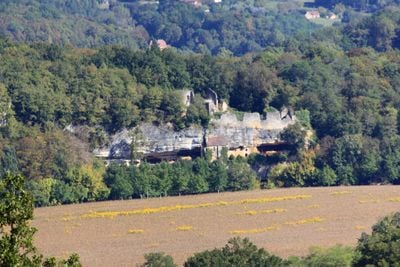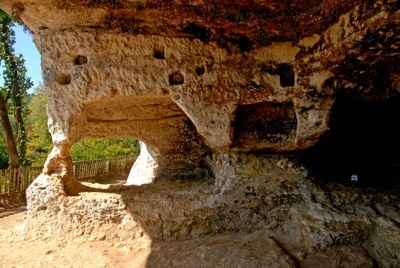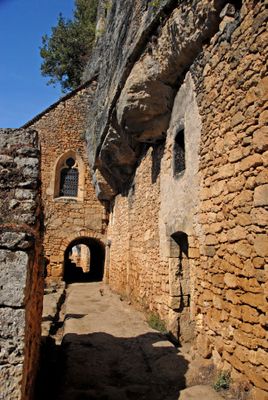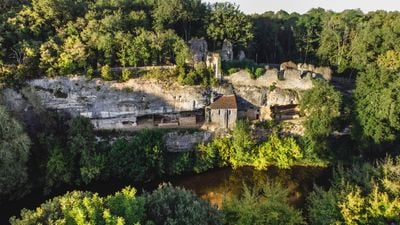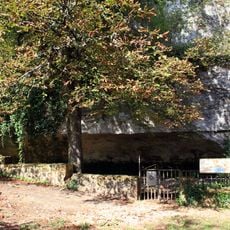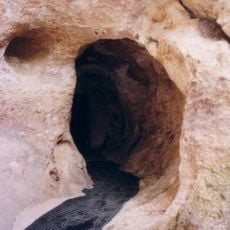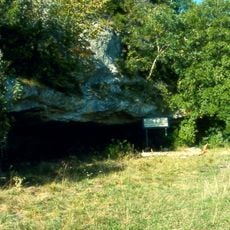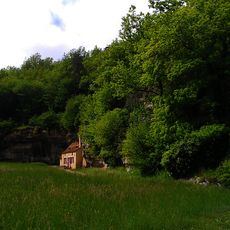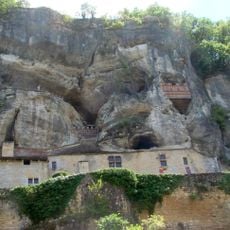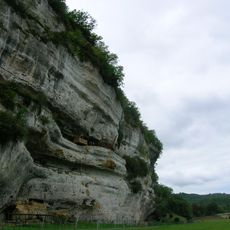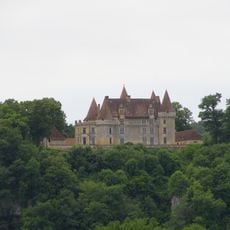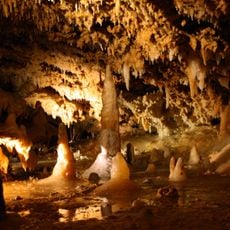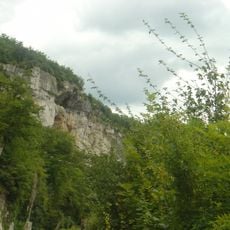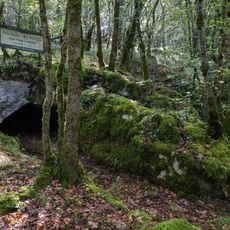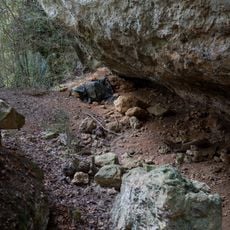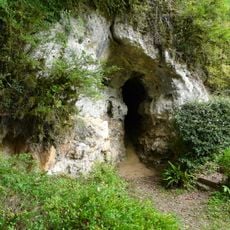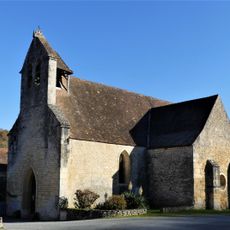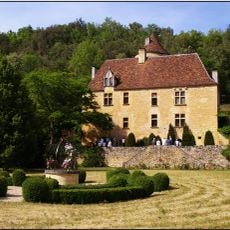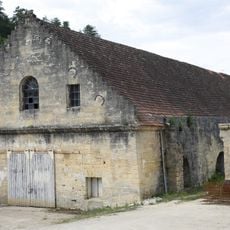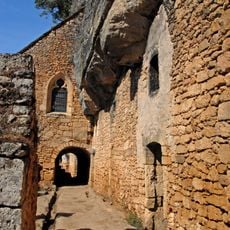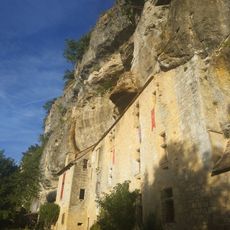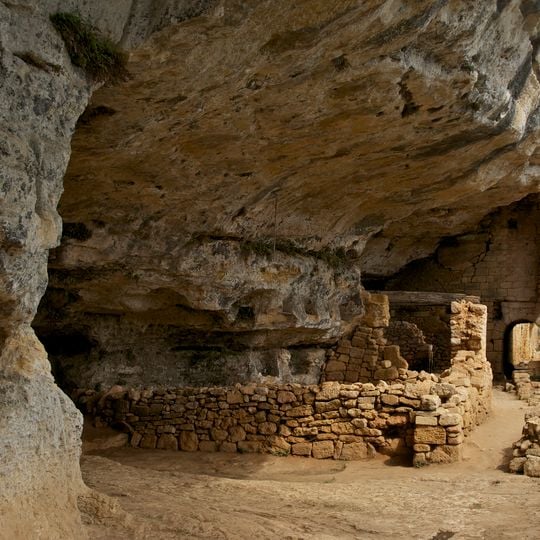
Abri de la Madeleine, Prehistoric rock shelter in Tursac, France.
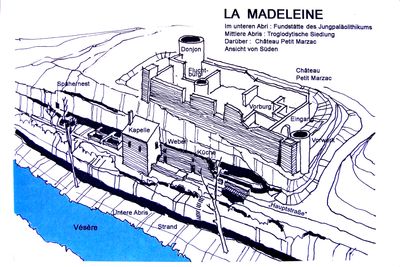
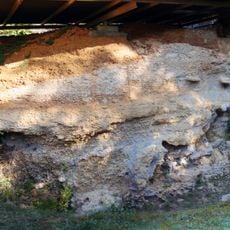
Abri de la Madeleine is a prehistoric rock shelter in the Vézère valley with multiple stacked archaeological layers revealing different periods of human occupation. The site shows how people lived and adapted to their environment across thousands of years of continuous habitation.
Systematic excavation began in 1863 and uncovered artifacts that fundamentally changed understanding of Magdalenian culture. These discoveries continue to shape our knowledge of the late Stone Age in western Europe.
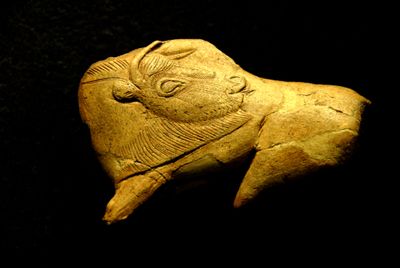
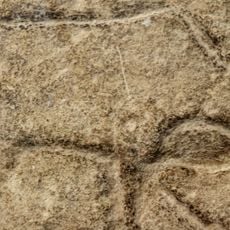
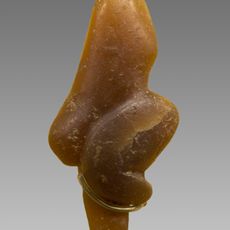
The shelter displays carved objects and bone tools that reveal how Upper Paleolithic people made everyday items and decorated their surroundings. These objects show the craftsmanship and practical knowledge of communities living in the Vézère valley thousands of years ago.
The site is accessible only through guided tours where visitors explore the different layers and traces of habitation. Most artifacts discovered here are displayed at the National Museum of Prehistory for detailed viewing.
Excavations in 1926 uncovered the burial of a young child adorned with shell jewelry. This discovery shows that even infants received careful burial treatment with valuable objects.
The community of curious travelers
AroundUs brings together thousands of curated places, local tips, and hidden gems, enriched daily by 60,000 contributors worldwide.