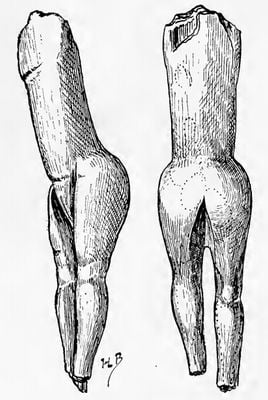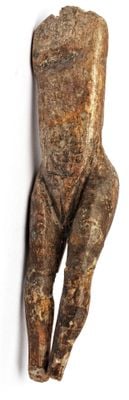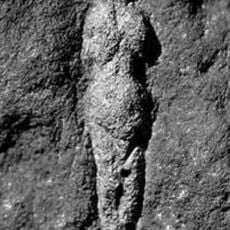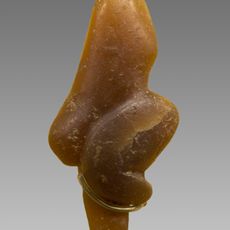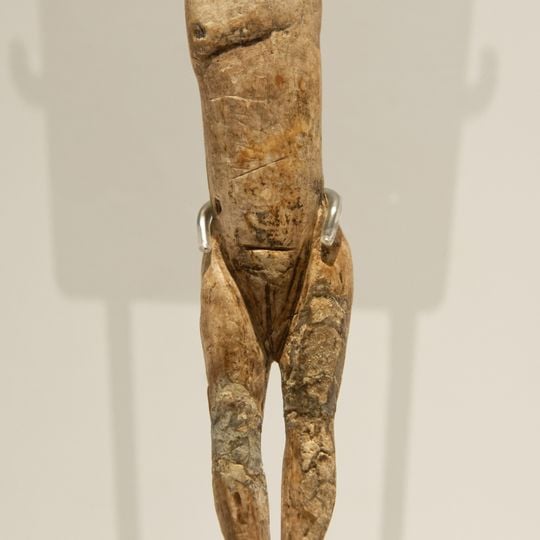
Immodest Venus, Prehistoric ivory sculpture at Musée de l'Homme, France
Immodest Venus is a small female sculpture standing roughly 3 inches (8 centimeters) tall, carved from mammoth ivory with a flat stomach and no surviving head portion. The piece exhibits the careful carving techniques of the Magdalenian period and was crafted from this precious material with notable precision.
This figurine was discovered in 1864 at Laugerie Basse by French Marquis Paul de Vibraye and became the first Venus figure found in French territory. The discovery marked an important moment in identifying prehistoric female representations across Western Europe.
The figurine portrays a young female body in development, setting it apart from other Venus figures that typically showed mature forms. This representation stands out because of how it captures youth rather than the adult proportions seen elsewhere in prehistoric female sculptures.
Visitors can view this Magdalenian period artifact at the Musée de l'Homme in Paris where it is displayed within its permanent collections. The piece is kept behind glass to protect its well-preserved surface and fine carving details.
The name refers to an intentional contrast with classical Venus representations, which traditionally showed modesty by concealing body parts. This ironic title highlights how openly and freely the female body is depicted in this prehistoric carving, without such restraint.
The community of curious travelers
AroundUs brings together thousands of curated places, local tips, and hidden gems, enriched daily by 90,831 contributors worldwide.