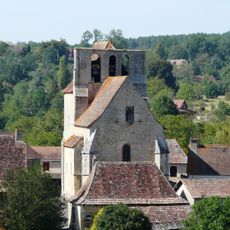
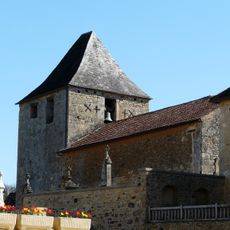
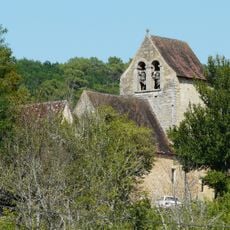
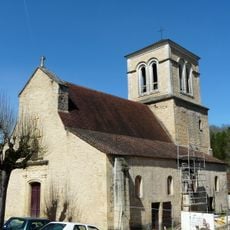
La Ferrassie 1, Neanderthal fossil site in Savignac-de-Miremont, Dordogne, France
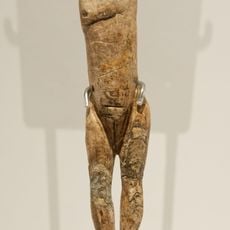
La Ferrassie 1 is a male Neanderthal skeleton found in 1909 at the La Ferrassie rock shelter in Savignac-de-Miremont, Dordogne. Its skull, the most complete Neanderthal skull known, has a low sloping forehead, a pronounced brow ridge and large nasal openings, with a cranial capacity of 1641 cm3. The tan and ochre bone is crossed by dark cracks; the lower jaw holds worn teeth, and several upper front teeth are missing.
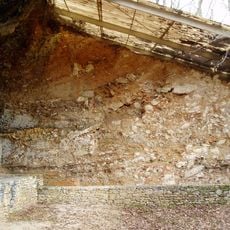
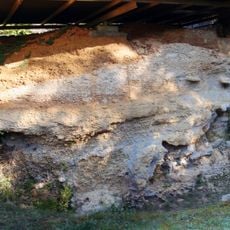
Scientists Louis Capitan and Denis Peyrony discovered this skeleton in 1909 inside a collapsed rock shelter in the Dordogne region. The remains are dated to somewhere between 58,000 and 50,000 years ago.
The skull's worn incisors, noted by anatomist John A. Wallace, suggest the teeth were used as a tool to hold objects, a habit he linked to the specimen's forward-projecting muzzle-shaped face. The lower jaw measures 126 mm, and the cheek teeth resemble those of present-day humans.
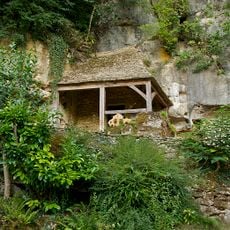
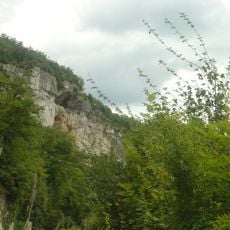
The fossil was found in a collapsed rock shelter at La Ferrassie, in Savignac-de-Miremont near Le Bugue, Dordogne. The site lies in the Vézère valley, where several prehistoric shelters are open to visitors. The skull is the most complete Neanderthal skull known, so the original is normally studied in the laboratory rather than displayed.
Medical analysis shows this skeleton suffered from a rare lung condition that caused abnormal bone growth. It is the only known Neanderthal specimen with this particular diagnosis.
The community of curious travelers
AroundUs brings together thousands of curated places, local tips, and hidden gems, enriched daily by 93,231 contributors worldwide.