Bassin de la Villette, Artificial lake and canal in 19th arrondissement, France
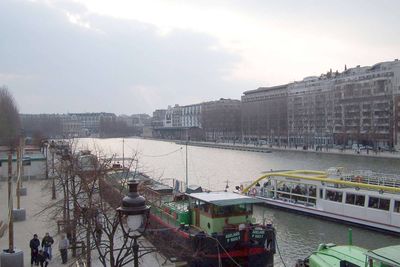
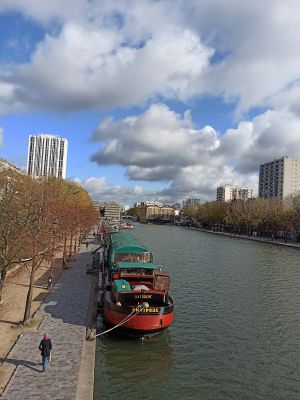
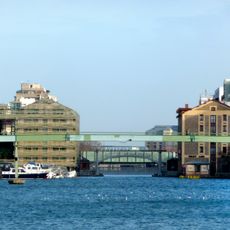
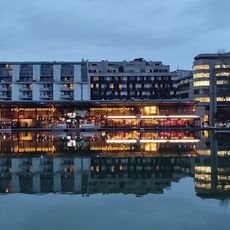
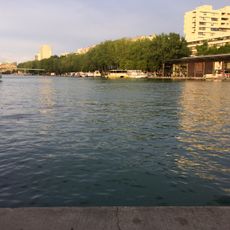
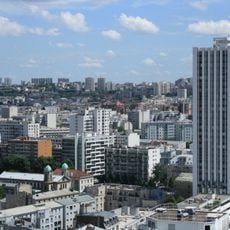
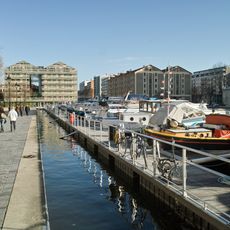
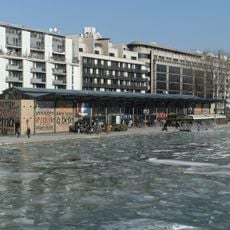
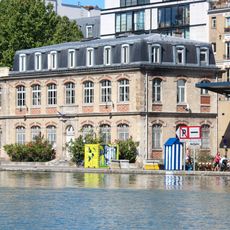
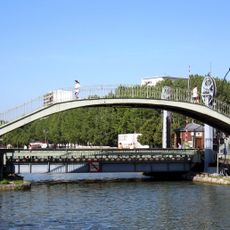
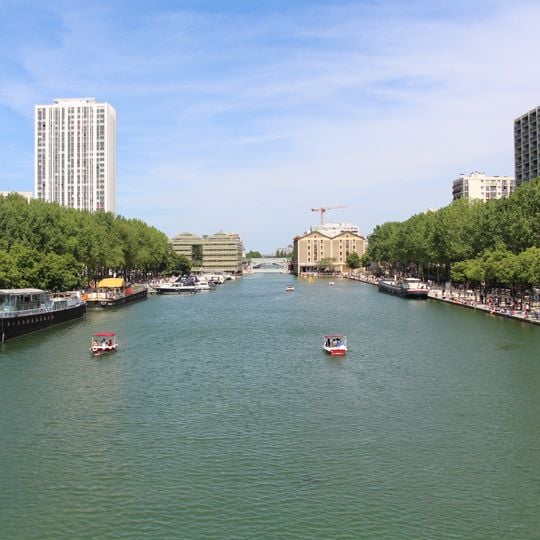
The Bassin de la Villette is Paris's largest artificial water body, filled on 2 December 1808 in the 19th arrondissement. It is split by the Rue de Crimée lifting bridge into a first basin 699 m long and 70 m wide, ending at the Rotonde de la Villette, and a second basin 730 m long and 30 m wide. The Quai de la Seine and Quai de la Loire run along its banks, linked midway by the Passerelle de la Moselle.
The basin was filled with water on 2 December 1808, serving as a drinking-water reserve for Paris and feeding navigation on the Saint-Denis and Saint-Martin canals. In 1832 users of its water suffered less from the cholera epidemic than those drinking from the Seine. Port traffic peaked in the late 19th century, matching Bordeaux, before declining to nothing; the 2009 bicentenary brought an exhibition.
The quays are named after film figures near the MK2 cinemas: promenade Jeanne-Moreau and promenade Signoret-Montand on the left bank, promenade Jean-Vigo on the right. North of the basin, the promenades honour sailors Florence-Arthaud and Éric-Tabarly. Each June the Fête du bassin brings concerts and mini-shows, ending with fireworks fired from the Passerelle de la Moselle.
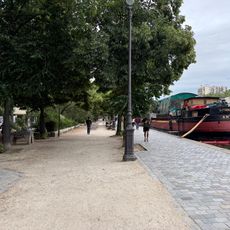
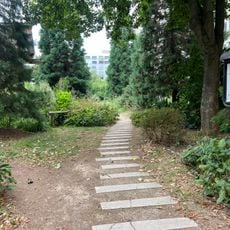
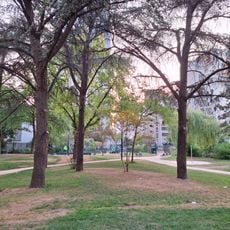
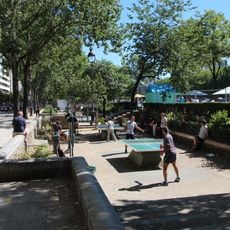
The waterside offers different ways to spend time: walking along the banks, sitting at cafés, or resting on the grassy areas. Visitors should wear comfortable shoes and explore during daylight hours, as the paths are well-lit.
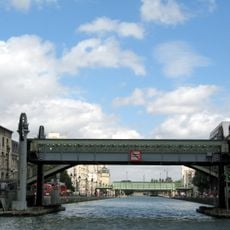
The Rue de Crimée lifting bridge, which separates the two basins, weighs 85 tons and was built in 1885; at the time it was the third-largest lifting bridge built in France. It is now the last lifting bridge in Paris and is listed as a historical monument. Pedestrians can still cross on a fixed elevated walkway while the deck is raised.
The community of curious travelers
AroundUs brings together thousands of curated places, local tips, and hidden gems, enriched daily by 94,363 contributors worldwide.