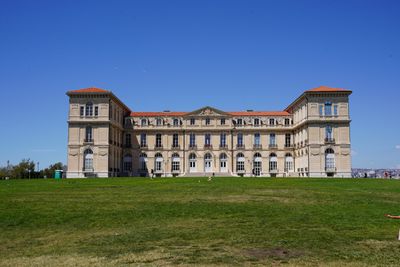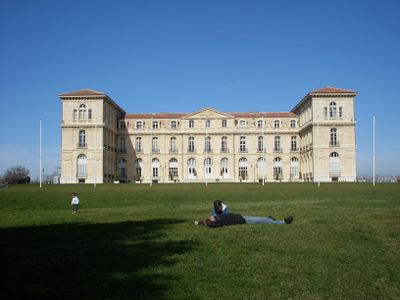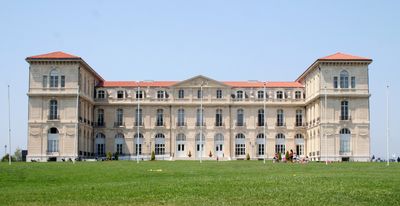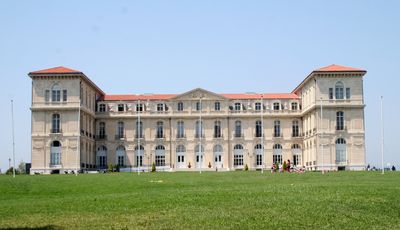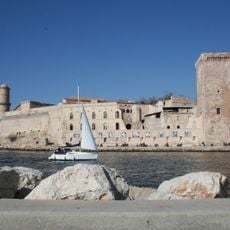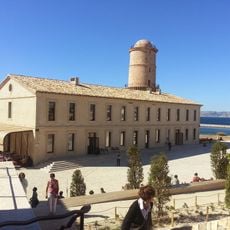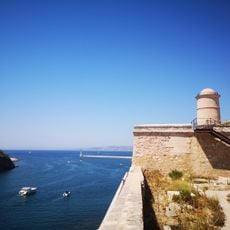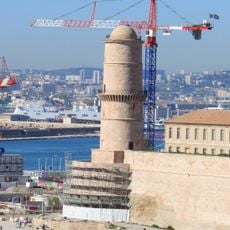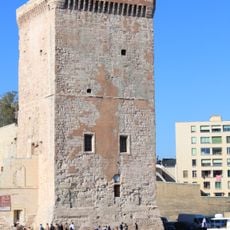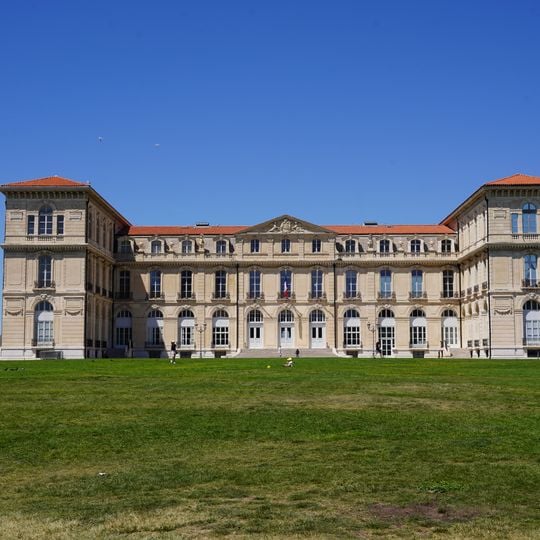
Palais du Pharo, Second Empire palace on the Mediterranean coast in Marseille, France
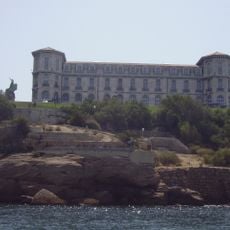
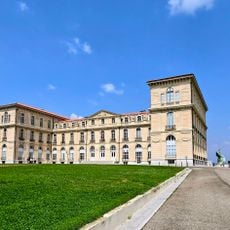
Palais du Pharo is a palace in the Second Empire style in Marseille, standing on a hillside above the Mediterranean coast and offering broad views across the Old Port and the entrance to the sea. The facade shows strong symmetry with tall windows framing the water, while garden grounds surround the building with paths and trees that drop toward the shore.
Napoleon III ordered the construction of this palace in 1858 as a gift for Empress Eugénie, with Swiss architect Jean Marc Samuel Louis Vaucher-Crémieux leading the works. After the end of the empire, the building served different public purposes before being converted into a venue for gatherings.
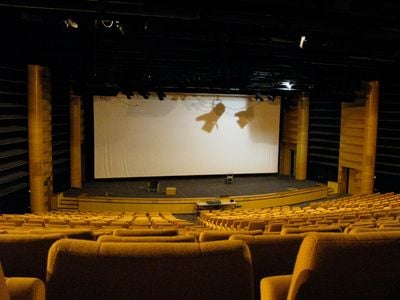
This building takes its name from the nearby lighthouse and now serves as a venue for international congresses and scientific gatherings, bringing together researchers and experts throughout the year. The rooms also open for public events, letting locals and visitors meet in a setting that echoes the city's ceremonial past.
The gardens open daily from sunrise to sunset and offer paths suited for walking and taking photographs. Guided visits inside require booking ahead through the tourism office, as the building also hosts events.
Inside, specialized medical training facilities with simulation rooms serve healthcare education in partnership with local universities. This use connects the setting with modern teaching and makes the palace a place where medical students train practical skills.
Location: Marseille
Architects: Jean Marc Samuel Louis Vaucher-Crémieux
Architectural style: Second Empire style
Website: http://palaisdupharo.marseille.fr/en
GPS coordinates: 43.29417,5.35806
Latest update: December 5, 2025 22:28
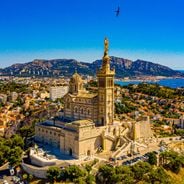
Marseille brings together ancient history and modern city life. This route reveals the many faces of the city through its most important places: the Notre-Dame de la Garde Basilica overlooks the entire city, while the Vieux-Port serves as the beating heart of urban activity. The harbor has been a gateway to the world for centuries, and its maritime past remains visible along the waterfront today. The collection connects impressive architecture with coastal landscapes. Historical buildings like the Palais Longchamp, the Cathédrale La Major, and Fort Saint-Jean tell stories of Marseille's political and military importance. Contemporary museums and artistic spaces show how the city has evolved. The Château d'If, a former fortress on an offshore island, comes alive through literature and history. Calanques National Park offers dramatic limestone cliffs and hidden coves that stretch along the coastline. Traditional fishing neighborhoods like the Vallon des Auffes and Malmousque preserve daily Marseille life. From street art districts like Cours Julien to quieter spots like the Goudes, the city reveals many sides and invites visitors to explore.
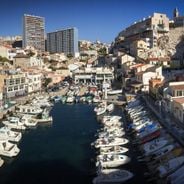
Marseille offers a range of photo locations that show the city's history and geography. Visitors can watch daily life at the harbor in Vallon des Auffes, where fishing boats create traditional scenes, or walk the steep streets of the old quarter Le Panier, with its colorful facades and local shops. The Calanque de Morgiou displays natural coastal beauty with limestone cliffs and turquoise water. The city connects historical buildings with modern life. Fort Saint-Jean shapes the harbor landscape, while the Palais Longchamp impresses with its neoclassical design. Art and sculpture appear throughout: on Cours Julien with its street murals, in Vieille Charité, which serves as a cultural space, and in Le Corbusier's Cité Radieuse, showing postwar architecture. Those interested in religious monuments will find La Major Cathedral with its Byzantine form and Saint Victor Abbey with its long history. Natural spots like Corniche Kennedy and Borély Park offer views of the sea and local leisure culture. Less familiar places like La Buzine or Anse de la Fausse Monnaie reward explorers with quieter settings. Together, these locations show Marseille's many faces: a city with maritime tradition, artistic heritage, and open spaces by the water.
Museum of European and Mediterranean Civilisations
396 m
CMA CGM Tower
2.4 km
Abbey of St. Victor
746 m
Fort Saint-Jean
365 m
Fort Saint-Nicolas
517 m
Villa Méditerranée
464 m
Grotte Cosquer
469 m
Eglise Saint-Laurent
466 m
Musée de l'illusion Marseille
698 m
Musée Regards de Provence
589 m
Théâtre antique de Marseille
601 m
Phare de Sainte Marie
557 m
Interior of Saint-Victor
746 m
Monument aux héros et victimes de la mer
62 m
Mémorial des déportations
391 m
Fort Saint-Jean
336 m
Consigne sanitaire de Marseille
471 m
Théâtre de Lenche
744 m
La Désirade
326 m
Bench
414 m
Tour du Fanal
298 m
Mémorial des Déportations de la Ville de Marseille
391 m
Jardin Émile Duclaux
91 m
Scenic viewpoint
447 m
Scenic viewpoint
340 m
Jardin Missak Manouchian
328 m
Plage des Catalans
442 m
Tour du roi René
388 mVisited this place? Tap the stars to rate it and share your experience / photos with the community! Try now! You can cancel it anytime.
Discover hidden gems everywhere you go!
From secret cafés to breathtaking viewpoints, skip the crowded tourist spots and find places that match your style. Our app makes it easy with voice search, smart filtering, route optimization, and insider tips from travelers worldwide. Download now for the complete mobile experience.
A unique approach to discovering new places❞
— Le Figaro
All the places worth exploring❞
— France Info
A tailor-made excursion in just a few clicks❞
— 20 Minutes