Museum of Resistance in Limoges, History museum in Limoges, France
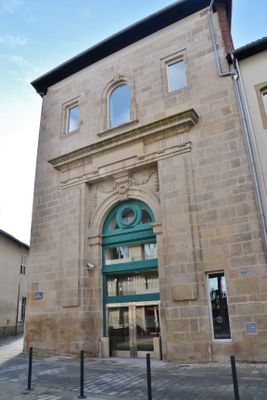
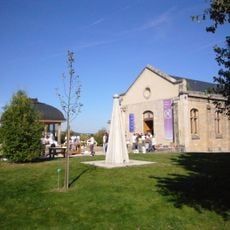
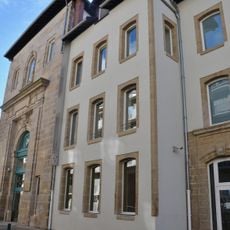
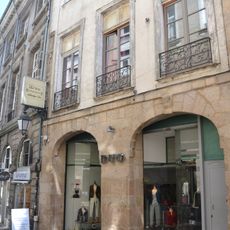
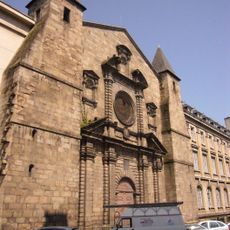
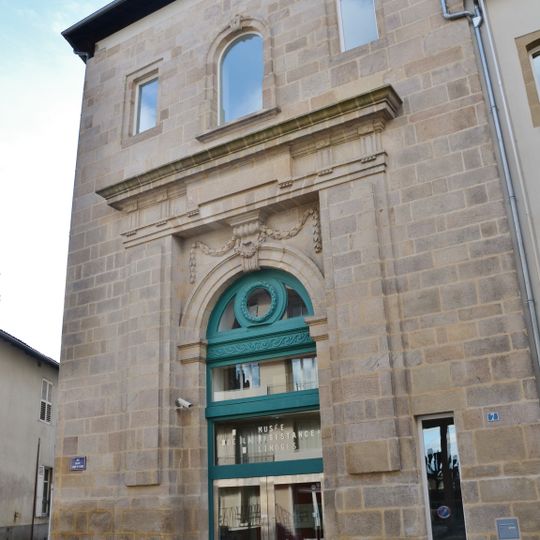
The Musée de la Résistance de Limoges occupies the former convent of the Sœurs de la Providence at 7 rue Neuve Saint-Étienne, in the Cité quarter below Saint-Étienne Cathedral. Its light tan stone facade has a round-arched doorway with carved moldings and a stone garland, framing a teal storefront lettered "MUSÉE DE LA RÉSISTANCE" and "LIMOGES". Inside, two floors and over ten thematic rooms hold around 800 exhibits.
The Sisters of Providence settled in Limoges around 1650 during the Counter-Reformation; their convent was built between 1650 and 1670 by an unknown architect, and Joseph Brousseau rebuilt the chapel and wings in 1779. Seized as national property during the French Revolution, the order was dissolved in 1792, and from 1833 the city used the convent as a barracks for 200 men until the end of the 19th century. The museum was fully redesigned between 2009 and 2012, adding 1,200 m² for a total of 1,400 m² at a cost of 7 million euros, and was renamed in 2012, dropping the name Henri-Chadourne.
The collection displays personal objects and testimonies from people who joined the resistance during World War II. These items and stories offer visitors a direct sense of the choices and experiences of that time.
The museum is easily accessible and has been designed so that all visitors, including those with mobility limitations, can view the exhibitions. Plan enough time to explore the documents and objects at a leisurely pace.
The permanent route runs through ten thematic rooms in chronological order, starting from 1939. Its programme was devised by historian Olivier Wieviorka, Limousin specialist Pascal Plas and museum director Annie Martin. The building's first convent phase, from 1650 to 1670, has an unknown architect; Joseph Brousseau rebuilt the chapel and wings in 1779.
The community of curious travelers
AroundUs brings together thousands of curated places, local tips, and hidden gems, enriched daily by 93,359 contributors worldwide.