Limoges Cathedral, Gothic cathedral in Limoges, France
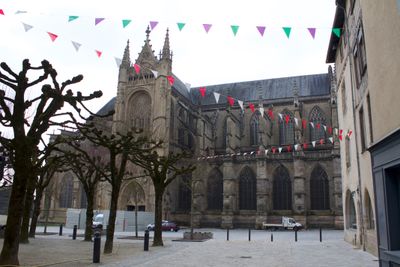
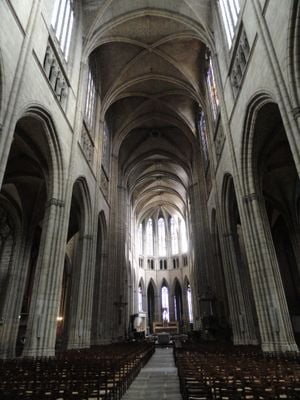
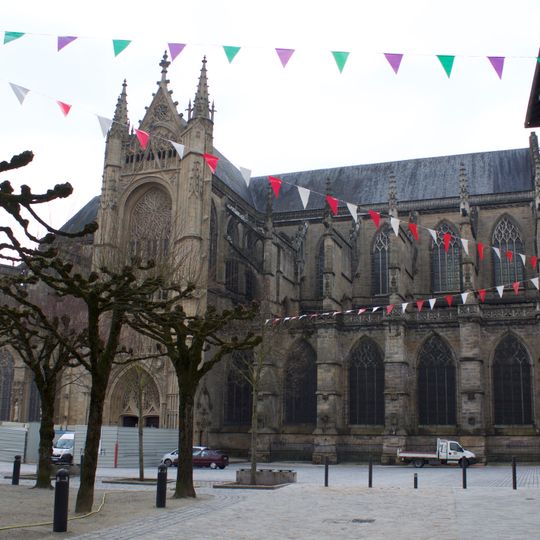
Limoges Cathedral is a Gothic structure with slender columns, soaring lines, and large windows that flood the interior with light. The layout follows a cross shape with a wide central nave and multiple side aisles.
Construction began in 1273 after the older Romanesque church no longer met the city's needs. Over the centuries, the cathedral was gradually expanded and reinforced until it reached its present form.
The name Saint-Étienne honours the city's first bishop, and the cathedral keeps the relics of Saint Martial and Saint Valerie. The Flamboyant portal of Saint-Jean, built between 1516 and 1541, closes the north transept and brought the former chapel of Saint-Martial inside the building, where it now serves as the baptistry. The Renaissance rood screen carved by Jean Arnaud in 1536 shows the labours of Hercules.
The cathedral stands in the old Cité quarter beside the bishop's gardens, whose terraces overlook the Vienne, and next to the Musée des Beaux-Arts in the former bishop's palace. The site slopes steeply, so the chevet rests on a large terrace that serves as its substructure. The nave was only joined to the Romanesque bell tower in 1888, so the west end and the choir read as two different campaigns.
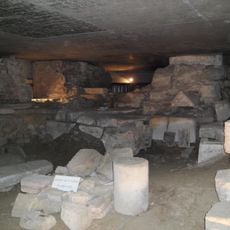
The Romanesque bell tower was reinforced with massive masonry in the 14th century so that Gothic upper levels could be added on top of it. The tower's first three storeys and the crypt beneath the choir are the oldest surviving parts of the building.
The community of curious travelers
AroundUs brings together thousands of curated places, local tips, and hidden gems, enriched daily by 94,035 contributors worldwide.