Musée de l'Évêché de Limoges, Fine arts museum in Limoges, France
The Musée de l'Évêché occupies a granite U-shaped palace built by Joseph Brousseau, with two entrance pavilions and an orangery. Its permanent collections fill three levels over 2,000 m²: enamels on the first floor, fine arts on the garden level, and archaeology and Limoges history in the basement. A carved curved pediment tops the central section above a balustraded balcony and arched doorway.
Joseph Brousseau built the episcopal palace between 1766 and 1774 for Bishop du Plessis d'Argentré, inspired by the nearby Château de Beauvais by the same architect. The museum opened there in 1912, and the building was nationalized in 1905 under the Third Republic. A renovation directed by curator Véronique Notin reopened all spaces on 4 December 2010.
The enamel collection spans the 11th to the 21st century. It includes a champlevé medallion from the 11th century found at Saint-Gens, a 12th-century plaque of the Visitation, and a reliquary of Saint Valeria. Painted enamels from the Renaissance, such as the Nativity Triptych, are displayed alongside works by the Laudin and Nouailher families.
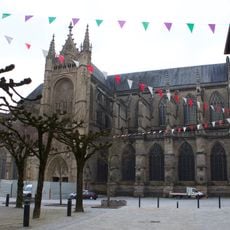
The museum stands at the foot of Saint-Étienne Cathedral in the Cité quarter, with entrance pavilions flanking the main palace; reception, bookshop and documentation centre occupy the west and east pavilions. An underground gallery links these pavilions to the permanent collections in the main building, and the Egyptian collection lies in spaces created beneath the courtyard of honour.
Archaeological digs at the museum site uncovered remains of pottery workshops and residential structures from different eras. These findings show how the location played a central role in the city's life over more than 1500 years.
The community of curious travelers
AroundUs brings together thousands of curated places, local tips, and hidden gems, enriched daily by 93,469 contributors worldwide.