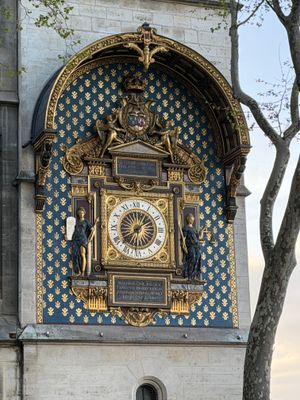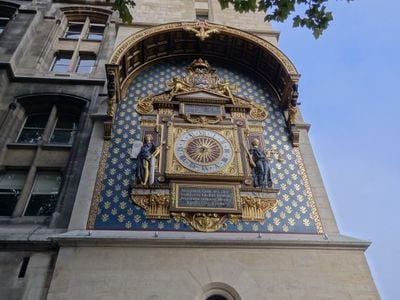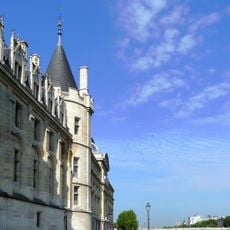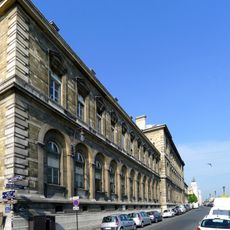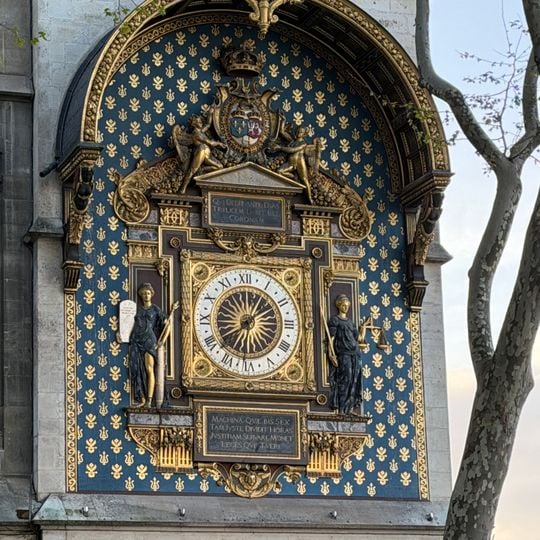
Charles V clock, Turret clock at Palais de la Cité, France
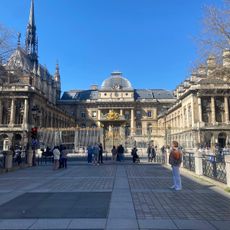
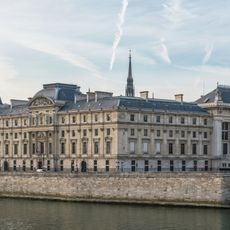
The Charles V clock is mounted on the outer wall of the Palais de la Cité and displays the complex design of a medieval mechanical timepiece with striking mechanisms. The dial and its moving hands remain visible from street level and form a distinctive feature on this historic palace structure.
A German clockmaker named Heinrich von Wiek built this timepiece between 1362 and 1370, making it the first public clock in Paris. It represents a turning point when Europe shifted from older timekeeping systems to more reliable mechanical clocks.
The clock's presence on the palace wall showed how important timekeeping became for city life in the Middle Ages. Visitors today can still see how it marked the rhythm of daily activities for people passing through the Cité.
The clock is easy to spot from street level as it is clearly mounted on the palace wall and visible from several angles around the square. The best view comes when entering the palace courtyard or exploring the surrounding area of the historic district.
The original verge and foliot escapement system of this clock marked a technological breakthrough that moved away from water-based clocks to reliable gear-based systems. This escapement design became so influential that it set the standard for European clockmakers for centuries to follow.
The community of curious travelers
AroundUs brings together thousands of curated places, local tips, and hidden gems, enriched daily by 90,798 contributors worldwide.