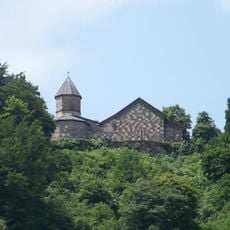
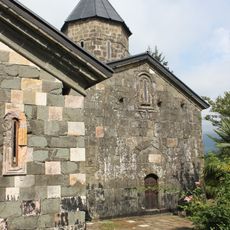
Askana Fortress, Military fortress in Guria region, Georgia.
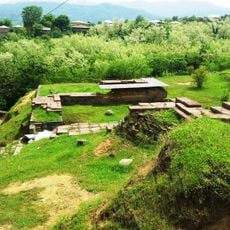
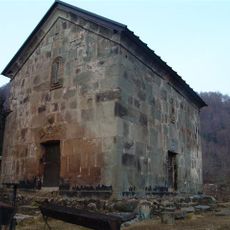
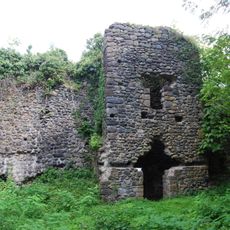
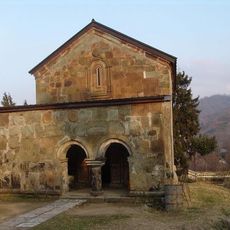
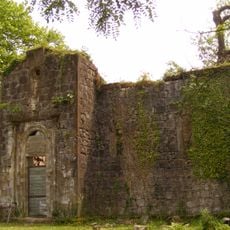
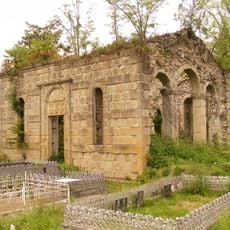
Askana Fortress stands on the left bank of the Bakhvistskali river between the Delemuri and Tapuriati mountains, on the site of the abandoned village Tsikhisubani. Its walls of split stone and lime mortar exceed 2 m in thickness and 6 m in height, with the entrance on the southwest side. Beside a deep well, now filled with rubble, are the ruins of a palace and a basilica.
Askana Fortress has several construction layers, the oldest dating to the 4th century and the newest to the 19th. In the 1770s it was taken by Ottoman forces and retaken by Mamia IV Gurieli and Solomon I. In 1804 Kaikhosro Gurieli seized it from David Asatiani after a six-week siege, and in 1828 Russian troops occupied it.
The fortress was built using methods common to the region, with stones sourced from nearby quarries. Local builders shaped the construction style through their understanding of the local landscape.
The fortress stands on the left bank of the Bakhvistskali, between the Delemuri and Tapuriati mountains, on the territory of the abandoned village Tsikhisubani, where bentonite clay is mined today. The entrance is on the southwest side, beside a deep well now filled with stone and rubble; a tunnel from it once led down to the river. The walls are heavily damaged, so watch your footing.
No scientific expedition has ever surveyed Askana, so the fortress remains unstudied. Its name comes from the Askana community, to which Mtispiri historically belonged, not from the village itself. A well beside the southwest entrance once led down a tunnel to the Bakhvistskali river; it is now filled with rubble.
The community of curious travelers
AroundUs brings together thousands of curated places, local tips, and hidden gems, enriched daily by 94,477 contributors worldwide.