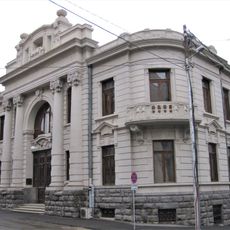
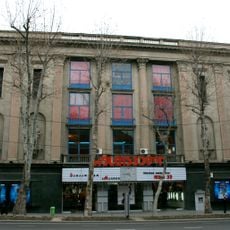
Tbilisi Opera and Ballet Theatre, Opera house in Rustaveli Avenue, Tbilisi, Georgia
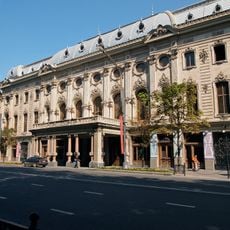
The Tbilisi Opera and Ballet Theatre stands on Rustaveli Avenue in a building by Baltic German architect Victor Schröter, completed in 1896. Its facade is banded in ochre and reddish-brown, with two domed towers, a central pointed arch and a wide carved panel above it. Inside, the layout, foyers and main hall follow European opera house conventions.
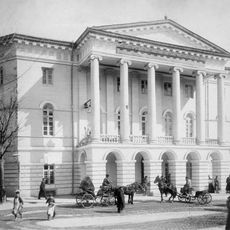
Count Mikhail Vorontsov, Viceroy of the Caucasus, initiated the theatre to draw the Georgian aristocracy into imperial social life after the 1832 plot. Foundations were laid on 15 April 1847 to a design by Giovanni Scudieri, and the house opened on 12 April 1851 with a masked ball, since the stage was unfinished. A fire destroyed it in 1874; the rebuilt theatre, designed by Victor Schröter, reopened on 3 November 1896 with Glinka's Ivan Susanin.
The theatre carries the name of composer Zacharia Paliashvili, whose works are performed here regularly. The venue shapes the cultural life of the city and draws both locals and visitors seeking opera and ballet performances.
The theatre stands on Rustaveli Avenue, on the site chosen in Erivansky Square where the administration expected the expanding city to centre. The auditorium seats 1,500, and the building holds three foyers, five salons and a cafe. The most recent restoration took six years and ended in January 2016.
The 1,218-kilogram chandelier arrived unassembled in twelve crates, shipped by steamer from Marseille to Kulevi on the Black Sea, then hauled over 300 kilometres to Tiflis by buffalo. The first director was the writer Vladimir Sollogub, appointed by Count Vorontsov.
The community of curious travelers
AroundUs brings together thousands of curated places, local tips, and hidden gems, enriched daily by 94,062 contributors worldwide.