Tbilisi Art Gallery, Art museum on Rustaveli Avenue, Tbilisi, Georgia
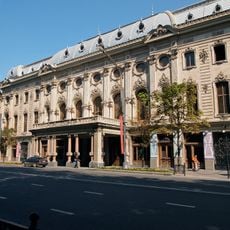
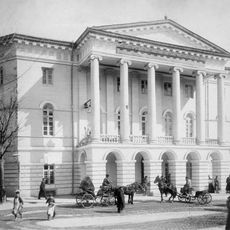
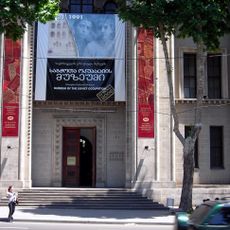
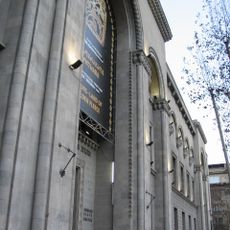
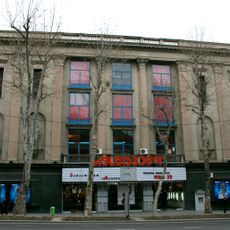
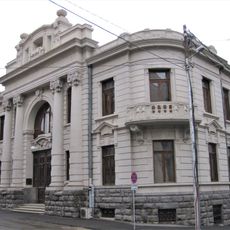
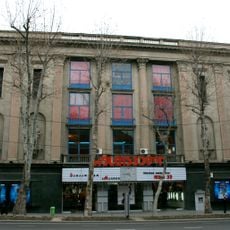
The Tbilisi Art Gallery, also called the National Gallery, occupies the former Temple of Glory at 11 Rustaveli Avenue, built in 1888 by architect Alexander Salzmann on the model of Rome's 1883 exhibition palace by Pio Piacentini. Its avenue facade is richly decorated with Corinthian columns and pilasters, and the entrance is topped by a semicircular exedra. Inside are eight exhibition halls, a restoration laboratory, temporary exhibition rooms, a study room and a shop, all designed by the Portuguese firm Ainda Arquitectura.
The building was erected in 1888 by architect Alexander Salzmann as the Temple of Glory, a military-history museum approved by Emperor Alexander III and modeled on Pio Piacentini's 1883 Rome exhibition palace. The gallery itself was founded in 1920 by painter Dimitri Shevardnadze, whose first exhibition opened that October. In 2007 it joined the Georgian National Museum, and in 2012 it was named after Shevardnadze.
The collection features religious artworks from medieval times, Persian miniatures, and works by Georgian painters across different periods. These pieces show artistic traditions that visitors can observe throughout the galleries today.
The gallery stands at 11 Rustaveli Avenue, not at Freedom Square. The 2007 reconstruction by the Portuguese firm Ainda Arquitectura added exhibition space behind the garden side while keeping the central facade and the original halls. Eight halls, a restoration laboratory, a temporary-exhibition store, a study room and a shop now serve visitors.
The Oriental section holds rare Persian miniatures depicting historical figures and court life from different periods of Iranian history. These valuable works offer insights into artistic traditions that visitors often overlook.
The community of curious travelers
AroundUs brings together thousands of curated places, local tips, and hidden gems, enriched daily by 94,629 contributors worldwide.