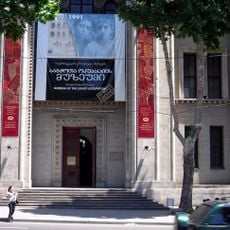
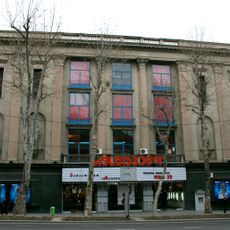
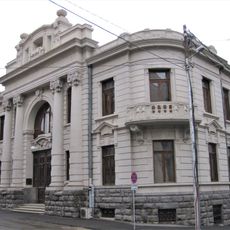
Simon Janashia Museum of Georgia, National history museum on Rustaveli Avenue, Tbilisi, Georgia
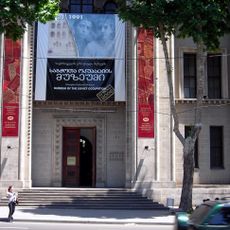
The Simon Janashia Museum of Georgia occupies a building on Rustaveli Avenue designed by architect Nikolai Severov in 1910, with facade elements of medieval Georgian decoration. Its departments cover archaeology, history, ethnography, numismatics, geology, botany and zoology. By 31 December 1984 the holdings numbered 1,006,520 exhibits, from Kura-Araxes goldwork to a collection of 80,000 coins.
The museum was established in 1852 in connection with the Russian Imperial Geographic Society. It was renamed in 1947 to honor the Georgian historian and scholar Simon Janashia for his work in preserving national memory.
The collection shows how people across Georgia lived, worked and created over time. Metalwork, pottery and everyday objects reveal regional traditions and the skills passed down through generations.
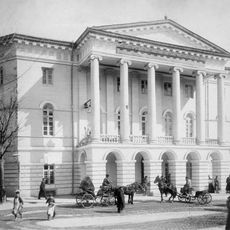
The main exhibition is on Rustaveli Avenue, in the centre of Tbilisi, reachable on foot from the downtown streets. The museum occupies several buildings, so check which one holds the display you want before setting out. The building was designed in 1910 by Nikolai Severov on the site of an older, dilapidated structure.
Among the museum's holdings are the fossil hominid remains of Homo ergaster found at Dmanisi, usually dated to about 1.8 million years ago. The collection also includes a hoard of 80,000 coins, mostly Georgian minting, and one of the world's largest collections of Urartian stone inscriptions.
The community of curious travelers
AroundUs brings together thousands of curated places, local tips, and hidden gems, enriched daily by 94,346 contributors worldwide.