Georgian National Youth Palace, Historic palace and youth centre on Rustaveli Avenue, Tbilisi, Georgia
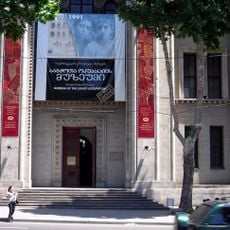
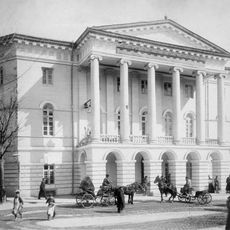
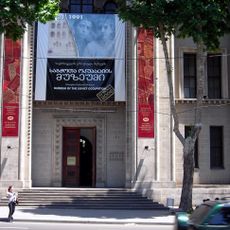
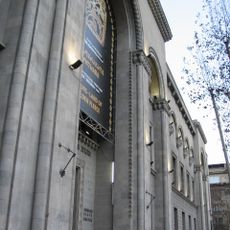
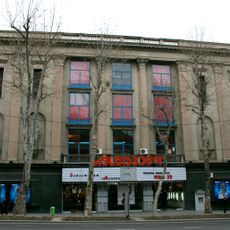
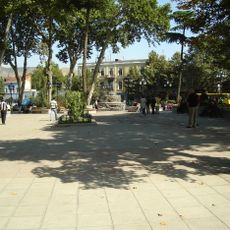
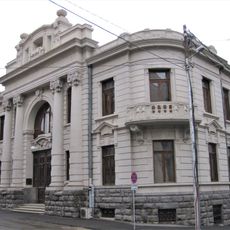
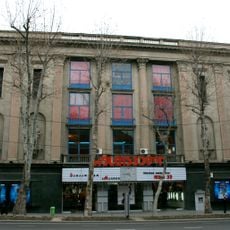
The Georgian National Youth Palace stands at 6 Rustaveli Avenue, its main facade facing the avenue while a garden wraps its west and south sides. Otto Jakob Simonson's 1865–1869 reconstruction gave the building a classical facade with Renaissance elements: rusticated walls, rows of Corinthian pilasters alternating with arched openings, medallions and curved pediments. The south facade opens onto the garden through a curved open staircase with iron columns.
The palace was constructed in 1818 and initially served as the residence of the Russian-appointed Commander-in-Chief of the Caucasus. Following Georgia's independence declaration in 1918, it shifted from a military administrative center to an educational institution focused on youth development.
The palace has housed the National Youth Palace since 1941, when it reopened as a Pioneers Palace for children after the 1937 Soviet decision. In 1959 it was named after Boris Dzneladze. From October 2025, after renovations, part of the building opened to the public as a museum.
The palace stands at 6 Rustaveli Avenue, its main facade facing the avenue, with a large garden wrapping its west and south sides. Since October 2025, part of the building has opened to the public as a museum following extensive renovations. The garden and the open staircase on the south facade are reached from the palace grounds.
The building served as a symbolic location where pivotal moments in Georgia's national history took place, drawing visitors interested in experiencing this connection to the past. While now a center for creative youth, it carries the memory of its role in crucial moments that shaped modern Georgia.
The community of curious travelers
AroundUs brings together thousands of curated places, local tips, and hidden gems, enriched daily by 93,195 contributors worldwide.