Bochorma fortress, Medieval fortress in Mtskheta-Mtianeti, Georgia
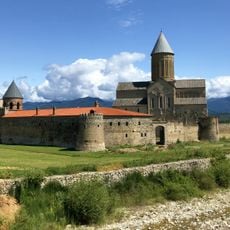
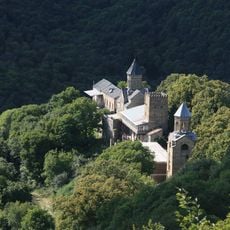
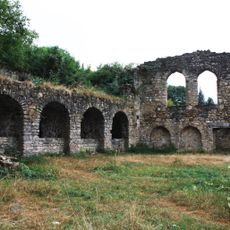
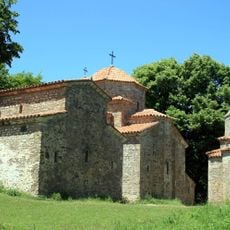
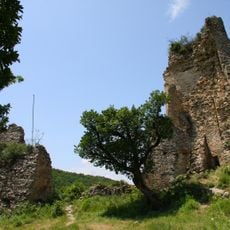
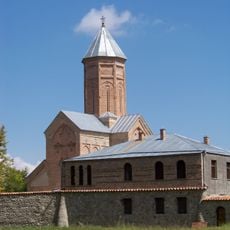
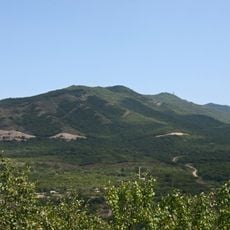
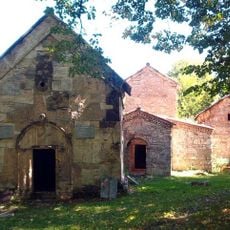
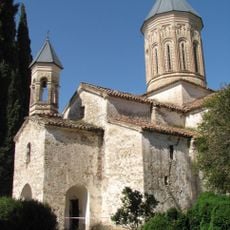
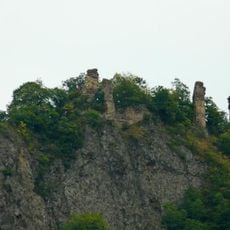
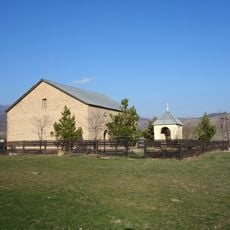
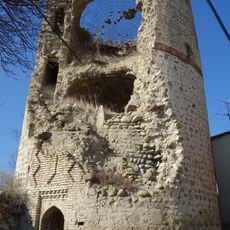
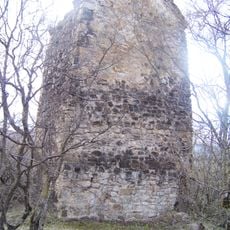
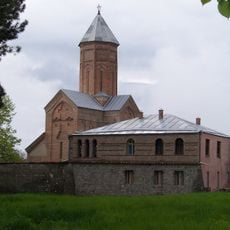
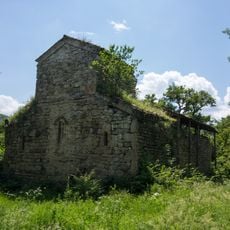
Bochorma fortress is a medieval complex on a 300 m-high ridge of the Gombori Range, 2 km east of Bochorma village on the left bank of the Iori River. Its 1.5 ha citadel is enclosed by a high curtain wall with towers and contains the domed Church of Saint George, a palace, a small hall church, a cylindrical tower and other structures, all half-ruined.
Bochorma is first mentioned in the Georgian chronicles during the Sajid invasion of 914, when it was abandoned without a fight. It was later seized by Shurta, brother of Kvirike II of Kakheti, and handed to George II of Abkhazia. Bagrat III took it in the war of 1008–1010, and in 1069 Bagrat IV exchanged it with Aghsartan I of Kakheti for the captive emir Fadl ibn Muhammad. King Heraclius II renovated it in 1749.
The Saint George Church within the complex displays frescoes from the early 12th century showing biblical scenes and portraits of saints. These wall paintings reveal how believers experienced and understood faith through visual storytelling.
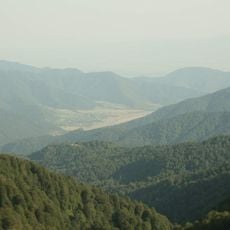
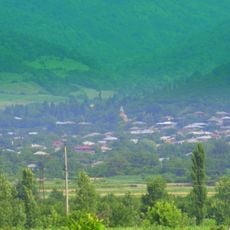
The ruins are located roughly 2 kilometers east of Bochorma village and can be reached through Tianeti Municipality in the Mtskheta-Mtianeti region. The site sits on a steep mountain ridge, so visitors should expect uneven ground and challenging terrain.
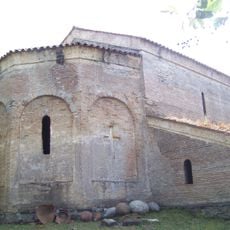
The Church of Saint George is a hexaconch: a dodecagonal building with six apses, its dome base pierced by six windows. In the lowest register of the northeastern conch, a donor portrait is identified as King David IV (r. 1089–1125), placed beside images of Constantine the Great and Helena.
The community of curious travelers
AroundUs brings together thousands of curated places, local tips, and hidden gems, enriched daily by 94,420 contributors worldwide.