Jonestown, Religious settlement in Port Kaituma, Guyana.
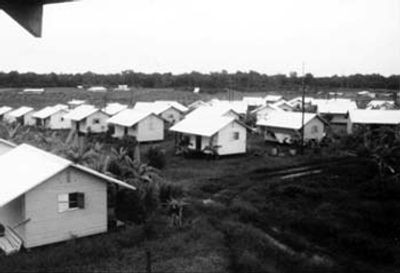
The Peoples Temple project covered 3,800 acres (1,540 hectares) of jungle in northwestern Guyana near the Venezuelan border, accessible by rough roads from Port Kaituma. More than one hundred simple wooden structures and dormitories formed the settlement, including family residences, a medical clinic, a schoolhouse and storage facilities. A central open pavilion with corrugated metal roofing served as the assembly area and dominated the central grounds, surrounded by agricultural plots and paths cutting through dense tropical growth.
Jim Jones founded the settlement in 1974 as a remote agricultural colony for followers of his Peoples Temple, relocating hundreds of members from California to Guyana beginning in 1977. On November 18, 1978, over nine hundred residents died through forced cyanide poisoning following the visit of Congressman Leo Ryan, who had been shot at the Port Kaituma airstrip beforehand. The Guyanese government cleared the site afterward, and the abandoned structures deteriorated in the jungle over subsequent decades.
The community operated agricultural programs focused on cassava, bananas and vegetables for self-sufficiency, while children attended classes taught in both English and Russian. Daily life followed an organized schedule of field labor, meals in communal dining halls and evening assemblies where Jones addressed residents through loudspeakers. Members had no access to outside contact, as leadership controlled all communication channels and portrayed the isolation as protection from perceived enemies.
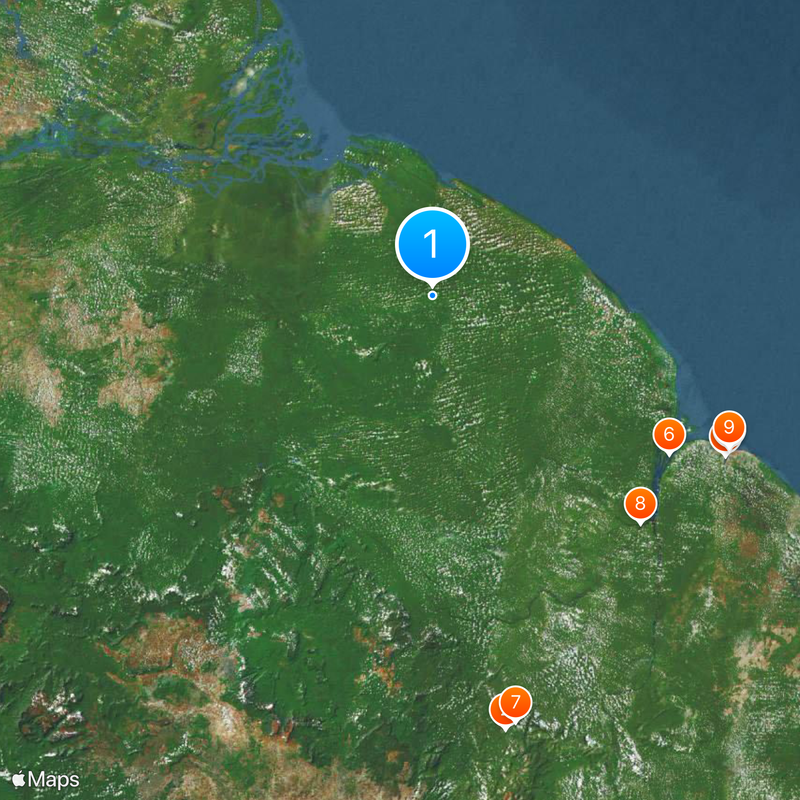
The site lies about 6 miles (10 kilometers) southwest of Port Kaituma in the jungle and is accessible only by rough tracks using four-wheel-drive vehicles during the dry season from September through November. Guyanese authorities have not prepared the deteriorated remains for visitors, and local guides discourage visits due to difficult access conditions, dense vegetation and lack of infrastructure. Those interested in exploring the region should travel through Port Kaituma and inquire there about authorized guides.
Residents wore uniform clothing during work and lived without personal possessions or privacy, as Jones made all decisions and censored mail correspondence with outsiders. A nurse named Hyacinth Thrash survived the mass poisoning because she was asleep that evening and unaware of the events unfolding at the central pavilion. After the tragedy, the Guyanese government acquired the abandoned land, but no one has used it since, and nature has largely reclaimed the traces of human habitation.
The community of curious travelers
AroundUs brings together thousands of curated places, local tips, and hidden gems, enriched daily by 92,783 contributors worldwide.