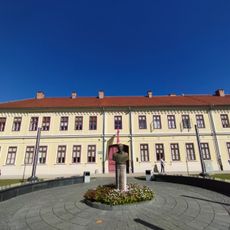
Vučedol Culture Museum, Archaeological museum in Vučedol, Vukovar, Croatia
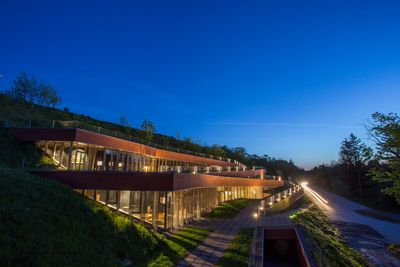
The Vučedol Culture Museum is built into a hillside above the Danube riverbank and displays objects from a prehistoric civilization. The exhibition spaces span multiple levels connected by ramps that guide visitors through the collection.
The site was first investigated in 1897 and settled around 6000 BCE. Between 3350 and 2300 BCE it was a major centre of Copper Age Europe, and the Gradac plateau was its metallurgical and cultural core. The museum, established by government decree on 30 June 2015, presents the Vučedol culture that gave the site its name.
The museum name refers to the Vučedol culture, whose pottery and tools are displayed throughout the exhibition rooms. Visitors can observe how people of that era lived, worked, and organized their communities through the objects on view.
The museum stands below the hill that holds the excavation site, 4 km downriver from Vukovar on the Danube's right bank. Visitors reach the site by road from Vukovar; the building lies at Vučedol 252. The display is arranged across 19 exhibition rooms, with a library on site.
The building was deliberately integrated into the hillside with a serpentine shape that follows the contour of the land. This design allows visitors to traverse elevation changes almost imperceptibly while moving through the exhibition.
The community of curious travelers
AroundUs brings together thousands of curated places, local tips, and hidden gems, enriched daily by 93,124 contributors worldwide.