Bronze Gate, Roman city gate in Split, Croatia
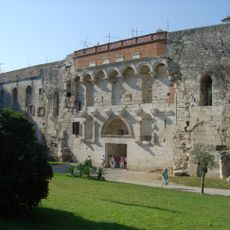
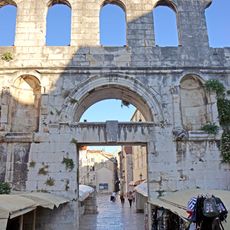
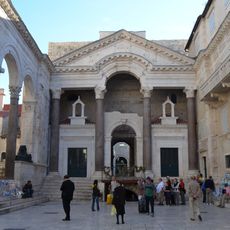
The Bronze Gate, or Porta Meridionalis, sits in the middle of the south wall of Diocletian's Palace and is the smallest of its four gates. Unlike the other gates, it has no decoration and no gatehouses, and a modern guidebook calls its style "anonymous and functional". This section of the outer wall is the best preserved.
The gate was built in the 4th century and provided Emperor Diocletian with direct maritime access to the palace complex by boat. It served as a key maritime connection for the imperial residence.
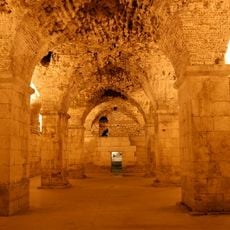
Locals also call it Vrata Grota, the "Gate of the Grotto", after the basement halls behind it. In the Middle Ages it was the Security Gate, a direct exit to the sea for escape during attacks on the palace. Today it is the busiest of the four gates and a usual starting point for guided tours of the old town.
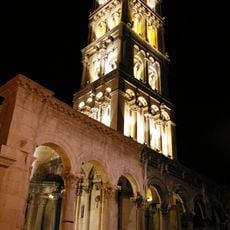
Access is through the waterfront promenade that runs in front of the gate today, providing direct entry to the interior spaces and cathedral. The site is flat and easy to visit.
In late antiquity the gate was called Porta Meridionalis, and in the Middle Ages it was known as the "Security Gate" because it gave a direct exit to the sea for escape during an attack on the palace. Palace residents reached it through a complex of basement rooms built just below the Peristyle.
The community of curious travelers
AroundUs brings together thousands of curated places, local tips, and hidden gems, enriched daily by 92,697 contributors worldwide.