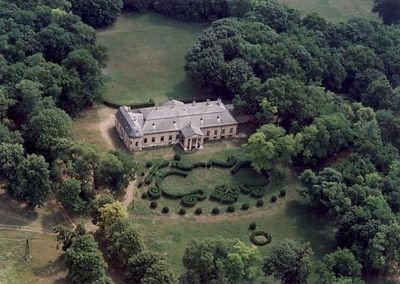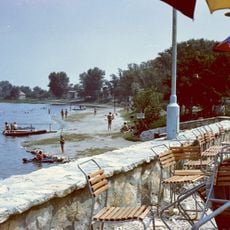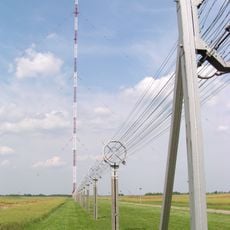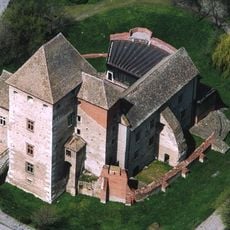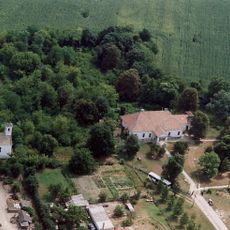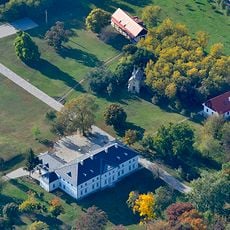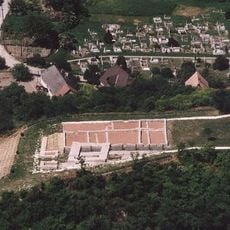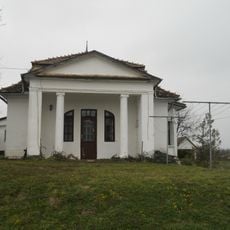
Dél-Mezőföld Tájvédelmi Körzet, Landscape protection area in Tolna and Fejér counties, Hungary.
The Dél-Mezőföld Landscape Protection Area covers 7,546.5 hectares across 12 patches on the Fejér–Tolna county border. Its thick Ice Age loess, compacted into rock-like forms, gives way in the south to sand left by the Ős-Sárvíz and the Danube, forming dunes at Tengelic and Paks. It includes the Németkér Látó-hegy, a 152-metre sand hill, and the Bikács Ökör-hegy.
Established in 1999 through the consolidation of several previously protected areas, this landscape protection zone was created to preserve the natural formations shaped by Ice Age deposits and ancient river sediments from the Danube.
The name Mezőföld means "field land", and the protected area keeps several named spots that visitors can look for: the Ökör-hegy at Bikács, protected since 1987 for its black pasqueflower, the Látó-hegy at Németkér, a 152-metre sand hill, and the Szedres site of the colourful crocus and spring pheasant's eye, which grazing livestock leave untouched because the leaves are poisonous.
Visitors can explore designated hiking trails including the Ürge and Cikta nature paths, but must coordinate with the Duna-Dráva National Park Directorate for guided tours and follow marked routes to protect sensitive ecosystems.
The saker falcon is not a breeding bird here; the source lists it among the raptors that nest in the area only as a rare Hungarian species, and it is the ground squirrel, reintroduced through a resettlement programme, that draws it. The Bikács Ökör-hegy, protected since 1987, rises barely 150 metres yet stands out from the surrounding dunes because of its black pasqueflower.
The community of curious travelers
AroundUs brings together thousands of curated places, local tips, and hidden gems, enriched daily by 94,214 contributors worldwide.