Castle of Csővár, Medieval castle ruins in Csővár, Hungary.
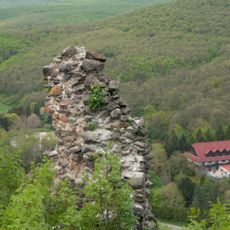
Castle of Csővár is a ruin perched on a hilltop in Pest County, displaying remaining stone walls and foundations that once formed a medieval defensive structure. The surviving elements offer visitors a tangible sense of the fortress's original layout and scale.
The castle's smaller predecessor is thought to have been built at the urging of King Béla IV, possibly by the wealthy Csői and Nézsai families, with silver coins found on site indicating the period. Máté Csák's troops later besieged and destroyed it, and it was rebuilt nearly a century later. In 1444 the impoverished Csői and Nézsai families, allied with the Hussites under Giskra, seized it, and it became a notorious robbers' den. After Ottoman capture in 1551 it was abandoned and probably burned; in the 1730s it was partly demolished, its stones used for the Prónay castle at Acsa.
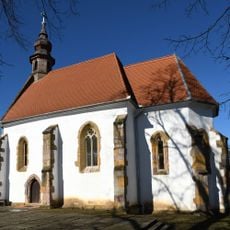
The castle's name comes from the village of Csővár, whose wealthy Csői and Nézsai families are thought to have built it. In the 15th century it gained a reputation as a robbers' den, its lords plundering nearby villages. The Gothic windows visible in the former castle chapel were cut by the Prónay family, who owned the ruin until 1945.
Reaching the ruins requires a moderate uphill walk from the village of Csővár, where parking is available below. The path to the site is somewhat natural and demands careful footing on uneven ground.
The castle's name comes from the village of Csővár, and the ruin stands about 20 km east of Vác. Its roundel, a 20-metre artillery tower, was built facing the gentler and more exposed approach. The Gothic windows visible in the former castle chapel wall were cut by the Prónay family, who owned the ruin until 1945.
The community of curious travelers
AroundUs brings together thousands of curated places, local tips, and hidden gems, enriched daily by 93,849 contributors worldwide.