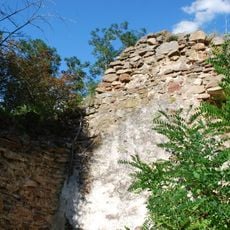
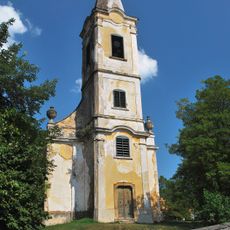
Church ruins of Ecsérpuszta, Romanesque church ruin from 12th century near Révfülöp, Hungary
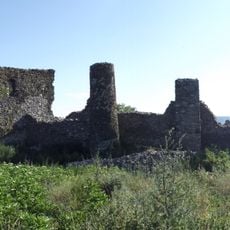
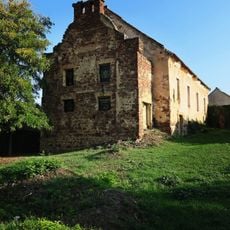
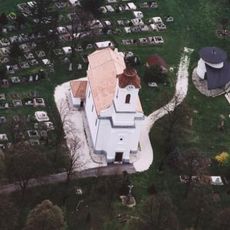
The Church ruins of Ecsérpuszta are the remains of a 13th-century three-nave church with a curved apse, a sacristy, an ossuary, and a southern porch. The west tower survives only in its foundations, while the Gothic inner wall with three arches, the gallery, and the buttresses still stand. The red sandstone blocks were quarried in the Balaton Uplands.
This structure was built during the Árpád dynasty period and served the settlement of Ecsér as its parish church until 1548, when Turkish forces burned both the village and the building. This destruction marked the end of the location's occupation.
The church was probably dedicated to Saint Christopher, patron of boatmen, whose fresco survives only in traces on the ruin. The village patron Echéry László obtained a pilgrimage licence for the church around 1430, before rebuilding it in Gothic style with a sacristy and porch.
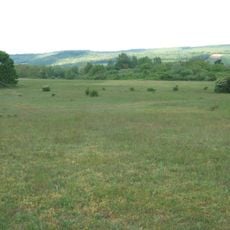
This archaeological site sits in an open field near railway guard house number 49 and offers free access throughout the year. The exposed structure can be viewed from multiple angles without restriction.
Four inscribed Roman stones were discovered within the ruins, suggesting that builders reused materials from an earlier Roman structure that once stood at this location. This find points to a long history of human occupation at the site.
The community of curious travelers
AroundUs brings together thousands of curated places, local tips, and hidden gems, enriched daily by 92,625 contributors worldwide.