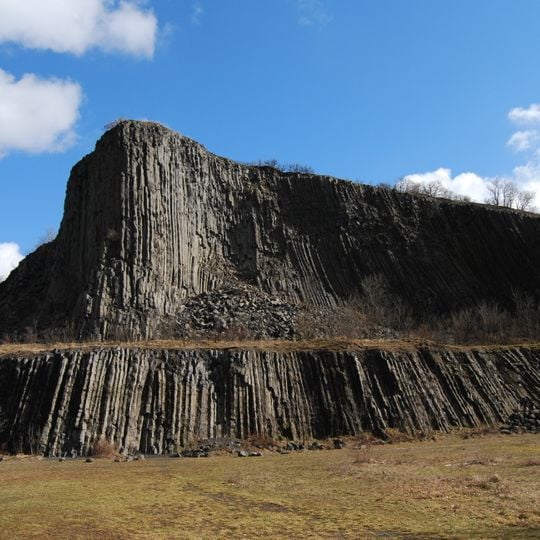
Hegyestű, Geological exhibit site in Balaton Uplands, Hungary
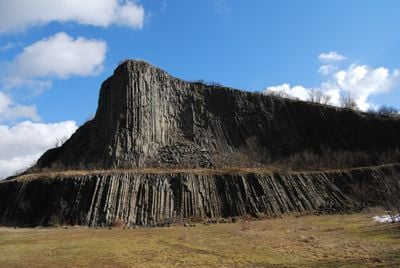
Hegyestű is a cone-shaped formation with vertical basalt columns located between Zánka and Monoszló villages in the Balaton Uplands. The former quarry exposes a wall of rock that reveals the distinctive pentagonal and hexagonal shapes formed by volcanic cooling.
The formation came into being roughly eight million years ago through volcanic activity in the Transdanubian region. Basalt extraction began in the 20th century and continued until mining operations ceased in 1970, after which the site became an educational destination.
The exhibition center displays minerals and rocks from the region in its indoor galleries. These collections help visitors understand how the landscape formed through natural geological processes.
The site is accessible from March through November with guided tours and multiple walking paths available to visitors. Wear sturdy shoes since the terrain around the former quarry is uneven and rocky.
The basalt columns formed as lava cooled slowly, creating these perfect geometric shapes. These hexagonal patterns occur naturally at only a few locations worldwide with comparable volcanic conditions.
The community of curious travelers
AroundUs brings together thousands of curated places, local tips, and hidden gems, enriched daily by 91,522 contributors worldwide.