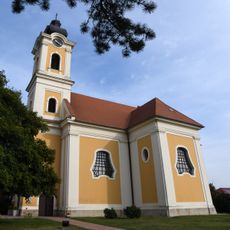
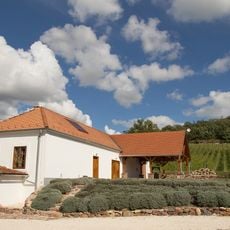
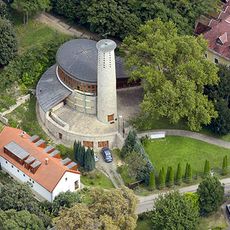
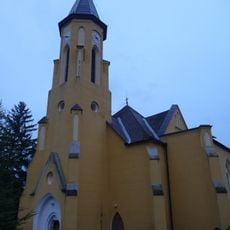
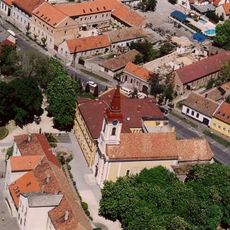
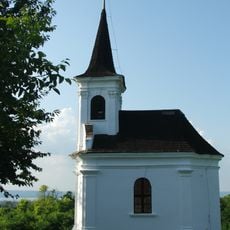
Badacsony, Volcanic butte and wine region in Tapolca District, Hungary
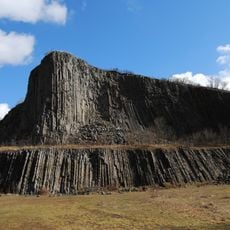
Badacsony is a volcanic butte in Hungary that rises above the surrounding landscape near Lake Balaton, covered with vineyards on its slopes. The hill consists of basalt at its foundation with loess and clay layers above, creating soil conditions that support grape cultivation.
Badacsony's basalt was formed by volcanic activity that began about 4.5 million years ago and ceased around 3 million years ago, after the Pannonian Sea's sandy-clay sediment had been deposited. Erosion later removed the loose sediment, leaving the basalt core as a witness mountain. Mining from the early 1900s reshaped parts of the slopes, creating habitats that mix vineyards, forests and former quarry areas.
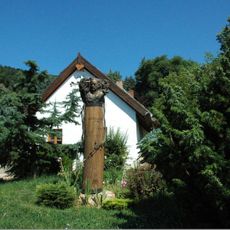
Badacsony is the central part of the Badacsony wine region, and the mountain's name is tied to the poet Sándor Kisfaludy, who lived on the mountain and first met his wife Róza Szegedy there. A small exhibition in the Róza Szegedy house on the mountain commemorates the meeting, while Kisfaludy's former house now operates as a restaurant.
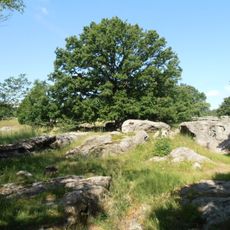
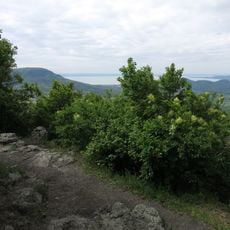
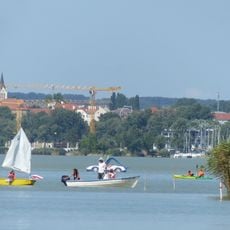
The mountain is crossed by the Országos Kéktúra and the Balaton-felvidék Kéktúra long-distance trails, and a thematic trail called Kuruc-út leads across it. The summit plateau is covered by continuous oak-hornbeam forest, so views open mainly from the basalt cliffs and scree slopes on the edges. The 71 and 7341 roads run along the eastern, southern and western foot, and a ferry landing on the shore connects to Fonyód.
The Kéknyelű grape grows here, a rare green variety found only in this region that produces wines with stone fruit flavors and mineral hints. This ancient vine was already known in medieval times and marks the continuity of viticulture in this corner of Hungary.
The community of curious travelers
AroundUs brings together thousands of curated places, local tips, and hidden gems, enriched daily by 94,341 contributors worldwide.