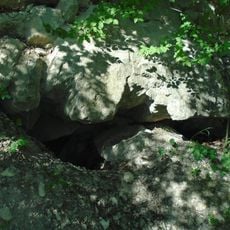
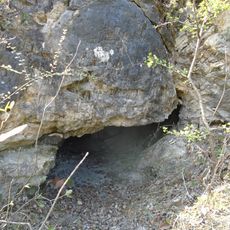
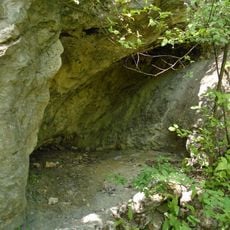
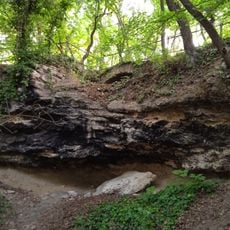
Barit Cave, Natural cave in Budapest, Hungary
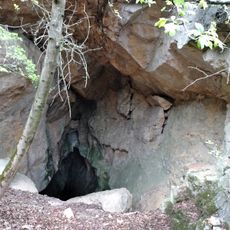
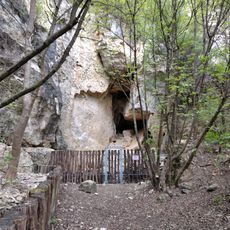
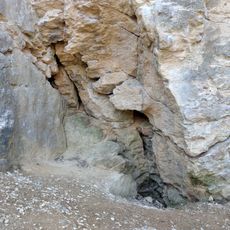
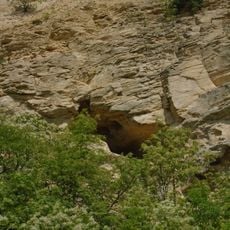
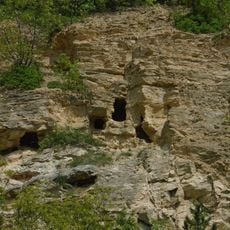
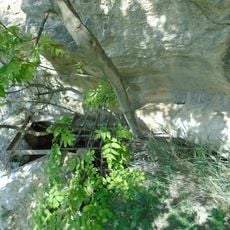
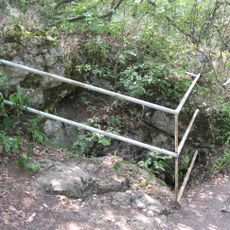
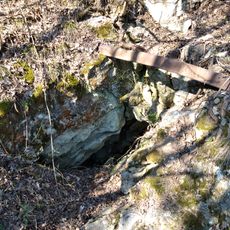
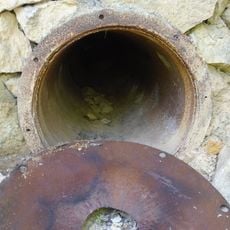
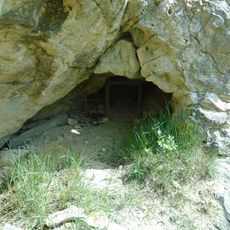
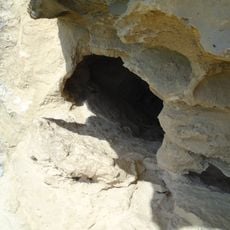
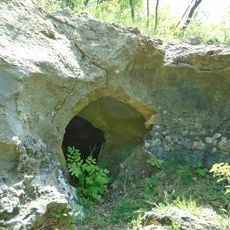
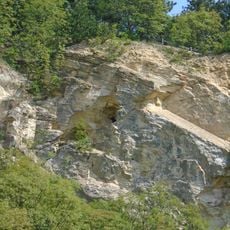
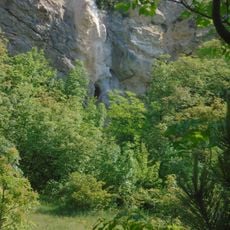
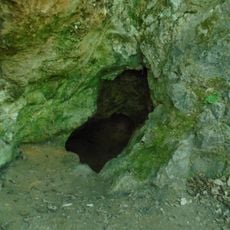
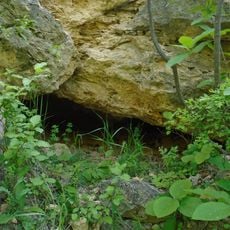
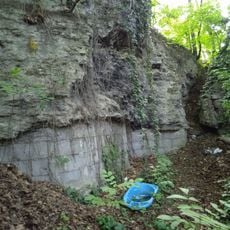
Barit Cave is a branching, multi-level cave in the upper quarry level of the abandoned two-tier southeast quarry on Mátyás Hill, Budapest. It was formed by mixing corrosion of hot water rising along a tectonic fissure in the Szépvölgy Limestone Formation, and it has three entrances close together in the rock wall: the 2.15 m wide Main Entrance, the artificial Lower Entrance 15 m above the quarry floor, and the small Upper Entrance. Inside, a 6 m corridor leads to the nearly 10 m long and 6 m wide Nagy-terem, whose walls and ceiling show dissolved surfaces, gas channels and early barite deposits.
The cave was created by connecting the Mátyás-hegyi 6. sz. sziklaüreg and the Mátyás-hegyi 7. sz. sziklaüreg, often described as caves no. 1 and no. 2. It opened during quarrying in the two-level southeastern quarry of Mátyás-hegy, and in 1966 it was first named Barit-barlang in the literature. It is the oldest thermal-water cave of the Buda thermal karst and the longest cave of that quarry.
The name Barit Cave was first recorded in 1966, referring to the barite deposits formed during early phases of the cave's development. Earlier literature called the two parts simply caves no. 1 and no. 2, and the joined system also appears as the BEAC Cave and the Eastern Quarry 1–2 Cave. Collectors damaged the calcite-filled fissures in the Great Hall, which is why the cave is now locked.
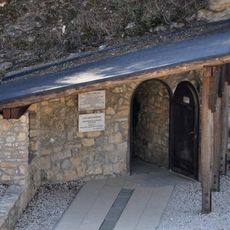
The cave is closed and undeveloped; entry requires a permit from the Duna–Ipoly National Park Directorate and basic caving equipment, and part of it is passable with easy climbing. At most four groups may visit per day, each of no more than eight people. The three entrances sit close together in the rock wall of the upper level of the disused two-level quarry on Mátyás-hegy, reached by climbing a steep scree slope.
The cave's sealed section was closed off mainly to protect a wall covered in scalenohedral calcite crystals, partly overgrown with pea-stone. Researchers reached it by digging beyond the Calcite Whale, a large calcite block that probably fell from the passage wall.
The community of curious travelers
AroundUs brings together thousands of curated places, local tips, and hidden gems, enriched daily by 92,652 contributors worldwide.