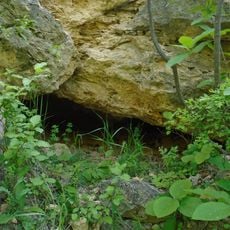
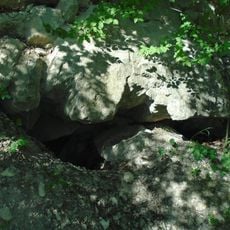
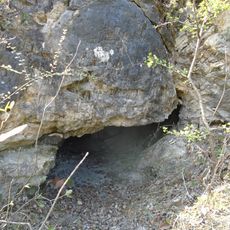
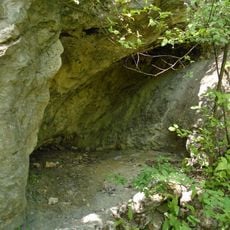
Áfonya utcai Cave, Natural cave in District II, Budapest, Hungary
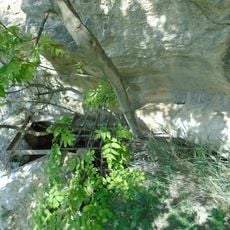
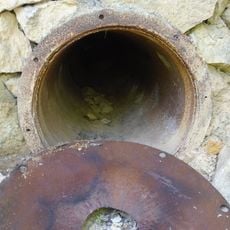
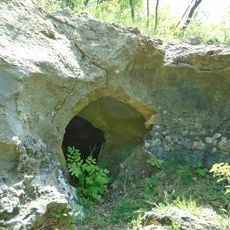
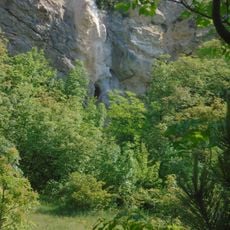
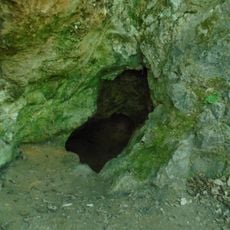
The Áfonya utcai Cave opens in the garden of Áfonya Street 9 on the side of József Hill, in Budapest's II district. A 22 m entrance gallery, closed by a steel door, leads into passages dissolved by hot water in Buda marl; spherical chambers, broken and collapsed surfaces and spherical cauldrons are visible. The cave is 28 m long, about 19 m of it walkable upright, with a floor area of 49.5 m².
In December 1962 the ground collapsed in the garden of Áfonya utca 9 under the weight of Cserhalmi László, opening a funnel-shaped hole. Members of the Vámőrségi Cave Research Group entered the cavity on 2 May 1963 and dug 25 m into it. Cserhalmi mapped the cave at 1:200 and reported it to the Hungarian Karst and Cave Research Society.
The cave has appeared in literature under several names: Áfonya-barlang, Cserhalmi-barlang and Háztáji-barlang. It was first called Áfonya utcai-barlang in 1983. Its entrance opens in the garden of the house at Áfonya utca 9, and visits require permission from the Duna–Ipoly National Park Directorate, with at most four groups of four people per day.
The entrance lies in the garden of Áfonya utca 9, on fenced private land, reached directly from the street; a 22 m entrance gallery leads inside. Visits need permission from the Duna–Ipoly National Park Directorate, with at most four groups of four people per day. About 19 m of the 28 m passage can be walked upright.
The entrance sits in the garden of Áfonya utca 9, on a fenced private plot. In December 1962 the ground collapsed under László Cserhalmi on the garden path, opening a funnel-shaped hole about 1.5 m across; the cavity was entered on 2 May 1963. The passage runs northeast–southwest, and the cave was first called Áfonya utcai-barlang in 1983.
The community of curious travelers
AroundUs brings together thousands of curated places, local tips, and hidden gems, enriched daily by 92,651 contributors worldwide.