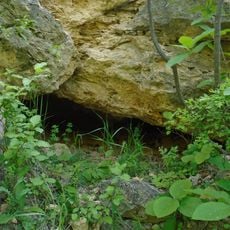
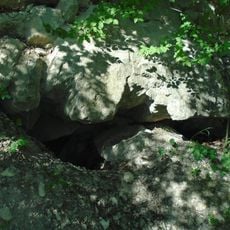
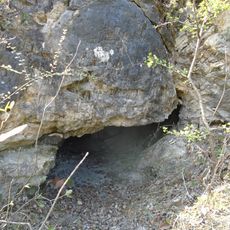
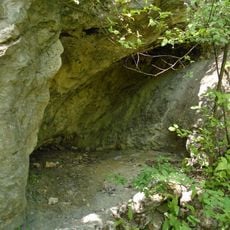
Ferenc-hegyi Cave, Cave system in Budapest, Hungary
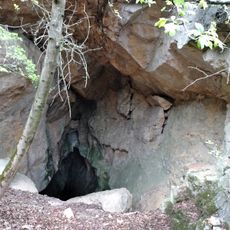
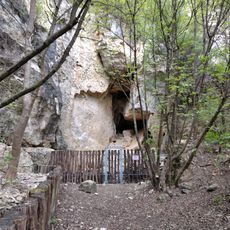
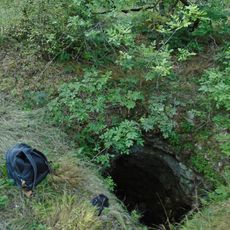
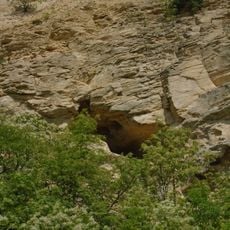
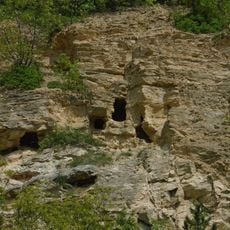
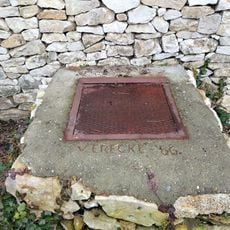
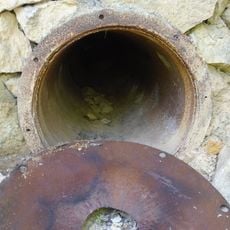
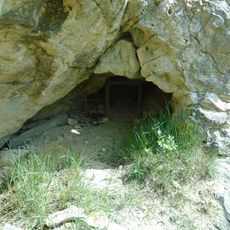
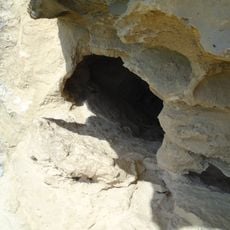
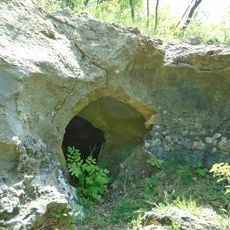
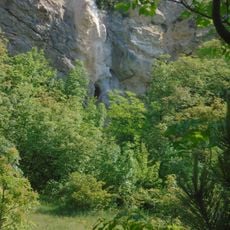
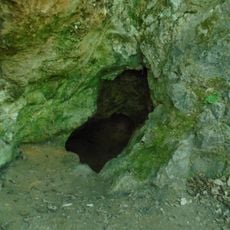
Ferenc-hegyi Cave is Hungary's seventh-longest cave, opening on Ferenc-hegy in Budapest's 2nd district. Its passages follow narrow northwest–southeast fissures and a perpendicular set in Eocene nummulitic limestone and marl, dissolved by rising thermal water. The artificial entrance on Ferenchegyi út is sealed; the old exploration entrance before Törökvész út 63 was concreted over. Its most labyrinthine passages are named Harakiri, Csúszda and Kígyó-torok.
On 26 September 1933, sewer works on Törökvész út uncovered a narrow cavity. Pharmacist Miklóssy Géza alerted Kadić Ottokár, who came the same day; Kessler Hubert and the Budapesti Egyetemi Turista Egyesület explored and surveyed it, finding about 500 m of passages. Later work tripled the length to 870 m. The old entrance in front of Törökvész út 63 was later concreted shut.
The cave takes its name from Ferenc-hegy, the hill where it opens. In literature it has also been called Aragonit-barlang and Ferenchegyi aragonitbarlang, after the aragonite formations found inside. The name Ferenc-hegyi-barlang was first used in 1976.
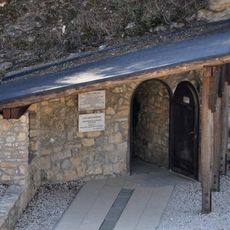
The cave can only be visited with a permit from the Duna–Ipoly National Park Directorate. The artificial entrance is sealed and lies on the north side of Ferenchegyi út, near the Őzgida utca junction; the old exploration entrance in front of Törökvész út 63 was concreted over. Expect narrow, fissure-like passages rather than large chambers, with an average temperature of 9.9 °C.
The cave was found on 26 September 1933, when a sewer trench was deepened on Törökvész út and an opening appeared; the pharmacist Miklóssy Géza inspected it and phoned Kadić Ottokár, who came the same day. Kessler Hubert and the Budapesti Egyetemi Turista Egyesület cavers then opened it up, and its length was about 500 m at the time.
The community of curious travelers
AroundUs brings together thousands of curated places, local tips, and hidden gems, enriched daily by 93,098 contributors worldwide.