Bajóti Büdös Cave, Protected cave in Bajót, Hungary.
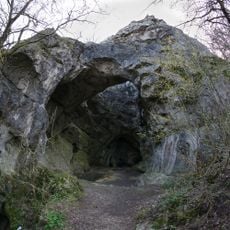
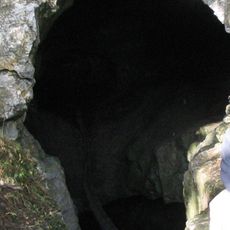
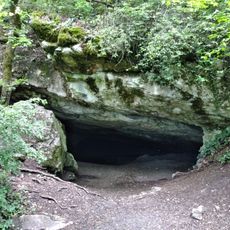
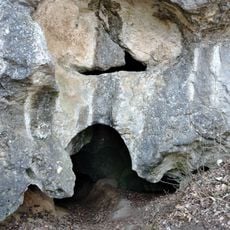
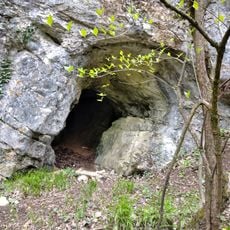
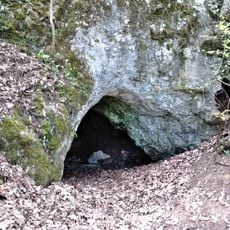
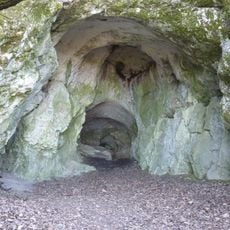
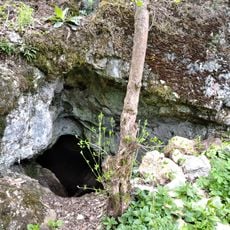
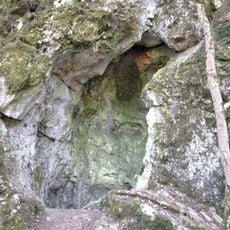
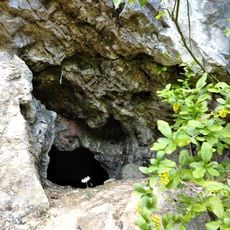
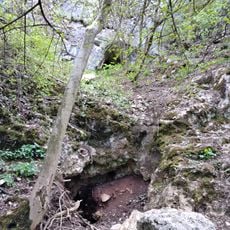
Bajóti Büdös Cave opens at the bottom of a fissure-like depression on the Domonkos-hegy plateau outside Bajót. Its 1.3 m wide, 1 m high entrance leads through a tight, rubble-strewn section into a wide corridor running south, 11 m long and 1.5–3.8 m wide. The cave formed in Middle Eocene sandstone along northwest–southeast and north–south fracture lines.
The cave was first named Bajóti Büdös-lyuk in the literature in 1989, though earlier sources called it Büdös-lyuk, Büdöslyuk or Domonkos-hegy barlangja. In 1986 the Vértes László Karst and Cave Research Group opened a roughly 90 m long, 20 m deep passage system in sandstone by breaking into the collapse doline, and that August a research camp built and sealed the entrance. The Gerecse Cave Research and Nature Conservation Association held a research permit in 1990 and maintained the lock.
The cave takes its name from a winter phenomenon visible at its entrance: mist that rises from the opening. This natural display inspired local people to call it Büdös-lyuk, reflecting what travelers can witness during cold months.
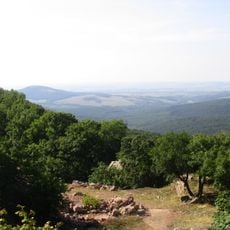
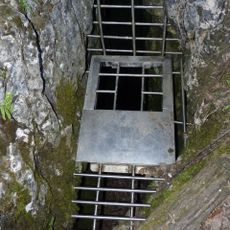
The cave is locked and can only be visited with a permit, as part of a research group and for research purposes. Visits are restricted throughout the year to protect the bats. The entrance lies at the bottom of a fissure-like depression on the Domonkos-hegy plateau, near the Országos Kéktúra trail.
The cave's Hungarian name, Büdös-lyuk, comes from the vapour cloud that pours out of the entrance in winter. The Gerecse Cave Research and Conservation Association recorded seven bat species here, among them the lesser horseshoe bat, Bechstein's bat and the western barbastelle.
The community of curious travelers
AroundUs brings together thousands of curated places, local tips, and hidden gems, enriched daily by 94,363 contributors worldwide.