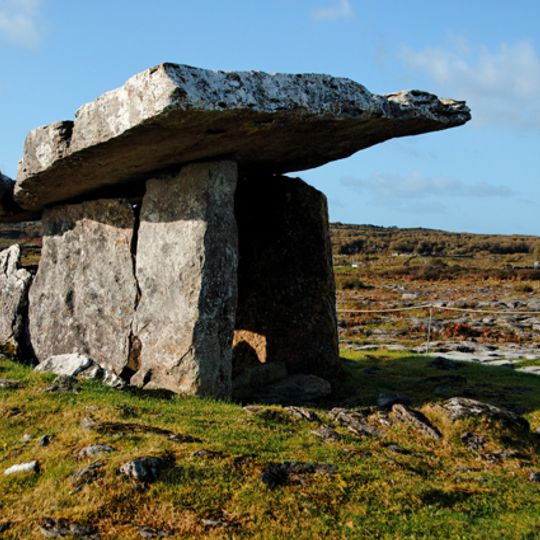
Poulnabrone, Neolithic burial site in The Burren, Ireland.
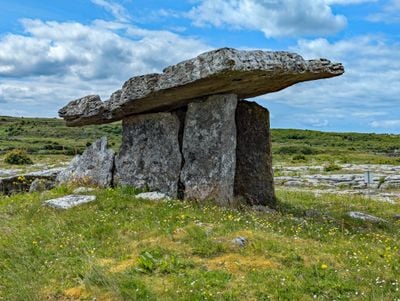
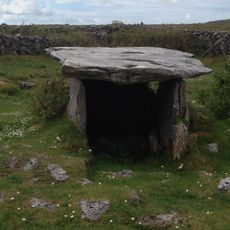
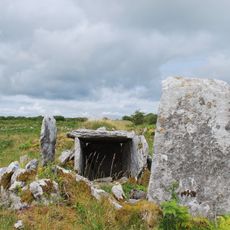
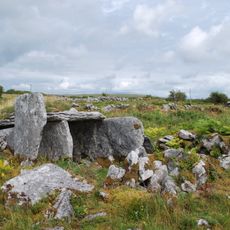
Poulnabrone dolmen is a portal tomb in the Burren, County Clare, made of a thick, uneven limestone capstone 3.9 m long, 2 to 3 m wide and 0.3 m thick. Two portal stones at the lower end mark the entrance, and two pairs of side stones carry the capstone, forming a chamber 2.8 m long that tapers eastwards. The capstone slopes upward towards the west, and a threshold stone lies across a crevice in front of the portals.
The structure was built between 3800 and 3200 BC and served as a burial site containing the remains of around 33 individuals along with stone tools and bone items. This monument represents one of Europe's oldest sepulchers and documents burial practices from the early Neolithic period.
Poulnabrone is an English phonetic rendering of the Irish Poll na Brón, from bró, "quern", so the name means "Hole of the Quernstone"; it is sometimes rendered Poll na mBrón, "Hole of Sorrows". The site was probably used for ritual into the Bronze Age, and the excavated remains and objects are held at the Clare Museum in Ennis, on loan from the National Museum of Ireland.
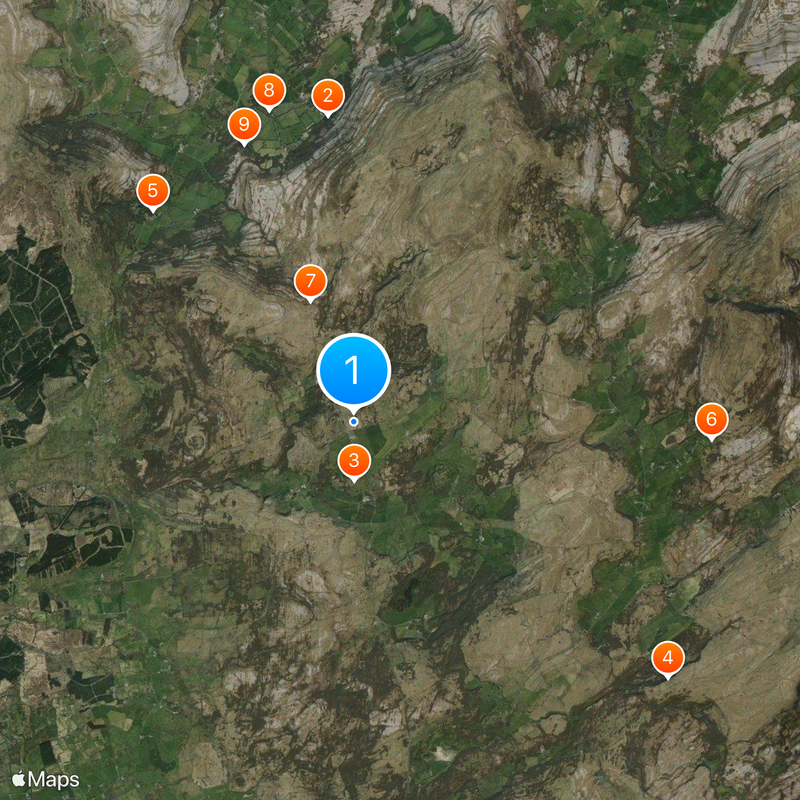
The site is located south of Ballyvaughan near the R480 road with parking available and a roughly 250-meter walking path leading to the monument. The access on foot is straightforward and follows a well-worn trail that leads directly to the stones.
The 1986 excavation found about 33 burials, including a Bronze Age infant interred long after the Neolithic use. The finds, among them a stone axe, bone jewellery and quartz crystals, are held at Clare Museum in Ennis, on loan from the National Museum of Ireland.
The community of curious travelers
AroundUs brings together thousands of curated places, local tips, and hidden gems, enriched daily by 93,182 contributors worldwide.