Muhraqa, Religious summit on Mount Carmel, Israel
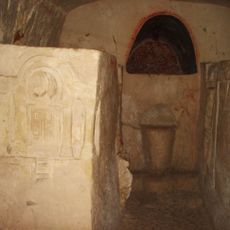
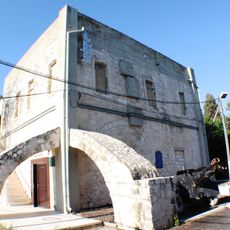
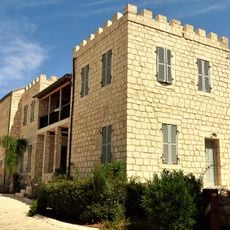
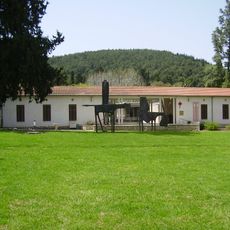
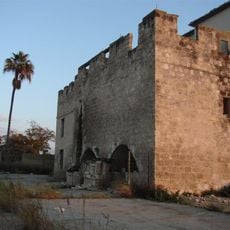
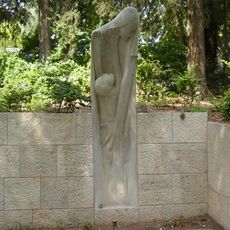
Muhraqa is a Carmelite monastery and pilgrimage site on a peak of the Carmel ridge, 474 m above sea level, about 2.5 km north-west of Yokneam Illit. Its small church has a single vaulted hall, white walls and an altar of twelve rough stones; the courtyard holds a stone statue of Elijah by the Nazareth artist Najeeb Nufi (1958). A road reaches the gate, but the site runs on its own generator.
Jewish, Muslim and Christian pilgrims have visited this summit since at least the mid-12th century, when Benjamin of Tudela recorded a structure marking Elijah's altar. The Carmelites bought the land in the mid-19th century, partly fearing the Greek Orthodox Church would acquire it first, and Brother Jean-Baptiste Cassini supervised construction. A chapel and other buildings were completed in 1867, the monastery core in 1883, and a theology seminary for Lebanese students operated briefly from 1907 until World War I closed the house.
Druze tradition identifies Elijah with al-Khidr, and the monastery site is regarded as the place where al-Khidr confronted the prophets of Baal and Ashtoreth. The Arabic name Deir al-Muhraqa means "Monastery of the Burning". The statue of Elijah in the courtyard, carved in 1958 by the Nazareth artist Najeeb Nufi, shows the prophet with a raised sword, his foot on the severed head of a Baal prophet.
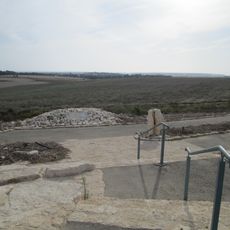
The site is easily accessible with parking and marked paths leading to viewing areas. Visitors should wear sturdy shoes since the paths are uneven and the sun can be quite intense.
The statue of Elijah in the monastery courtyard is not the original. The first, carved by a Bavarian Carmelite and brought in 1914, lost its head and sword hand when Turkish soldiers broke open its crate during World War I; the head was later retrieved from a nearby cistern, but the hand was never found.
The community of curious travelers
AroundUs brings together thousands of curated places, local tips, and hidden gems, enriched daily by 92,752 contributors worldwide.