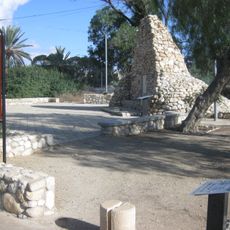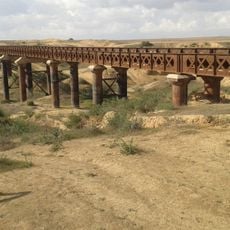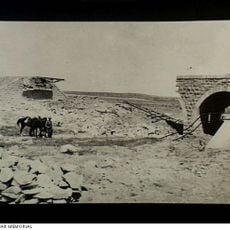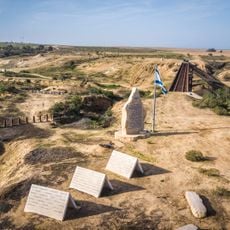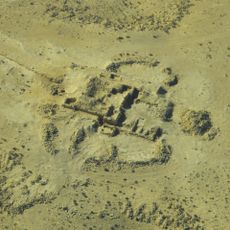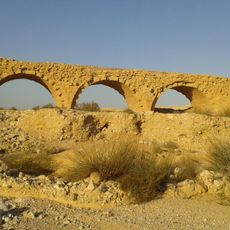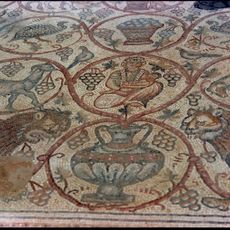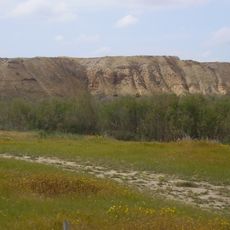
Rehovot-in-the-Negev, Water well site in Southern District, Israel.
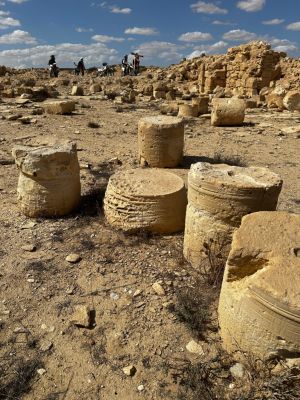
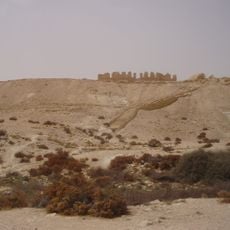
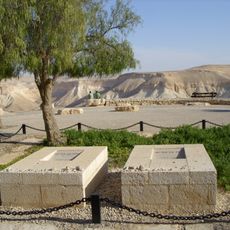
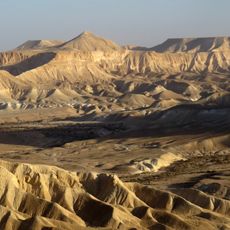
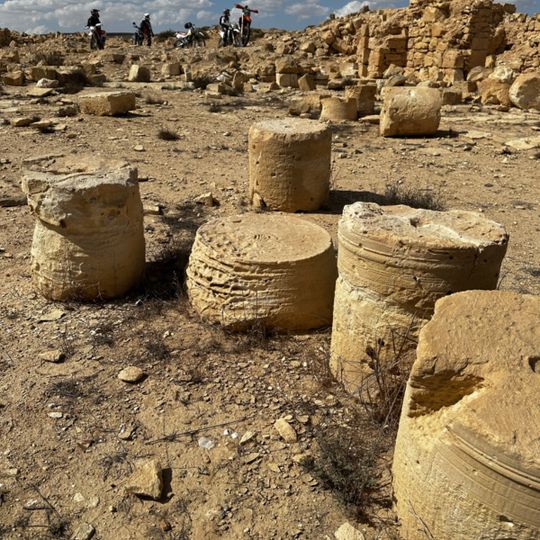
Rehovot-in-the-Negev (Hebrew: רחובות בנגב; Arabic: Khirbet Ruheibeh) is a well site in the Southern District of Israel, in the Wadi er-Ruheibeh about 32 km south of Beersheba. The photograph shows light brown stone well components on sandy ground: four short, thick cylindrical sections in front, one with a horizontal groove around its middle and another with a flat, broken top, and a taller weathered cylindrical shaft behind them.
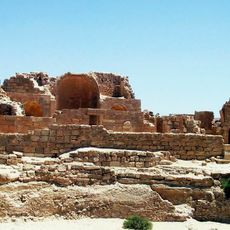
Rehovot-in-the-Negev was founded by the Nabataeans in the first century AD on the Incense Route. It flourished in Byzantine times, when it counted more than 10,000 inhabitants by the fifth century. Its Arabic name is Khirbet Ruheibeh, and it is now called Rehovot ba-Negev in Israel.
The name Rehoboth comes from Hebrew רְחוֹבוֹת, "broad places" or "open spaces"; Isaac gave it to the third well he dug in the Valley of Gerar because his herdsmen and those of Gerar no longer quarrelled over it. The site is identified with Khirbet Ruheibeh in Wady er-Ruheibeh, about 32 km south of Beersheba.
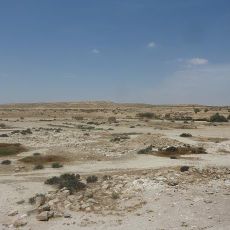
The ruins lie in the Wadi er-Ruheibeh, roughly 32 km south of Beersheba, on open desert ground with no shade or facilities. Bring drinking water and sun protection, and plan the visit for dry weather, since the unpaved approach tracks become difficult after rain. The stone well pieces and shaft stand exposed at surface level, so watch your footing among them.
The well Isaac named Rehoboth was the third he dug in the Valley of Gerar and the first over which his herdsmen and those of Gerar did not quarrel; Easton's Bible Dictionary (1893–97) placed it at Wady er-Ruheibeh, about 32 km south of Beersheba. The Hebrew name means "broad places", from Isaac's words that God had now given them room.
The community of curious travelers
AroundUs brings together thousands of curated places, local tips, and hidden gems, enriched daily by 93,842 contributors worldwide.