Omrit, Archaeological site in Golan Heights, Israel.
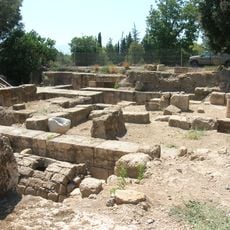
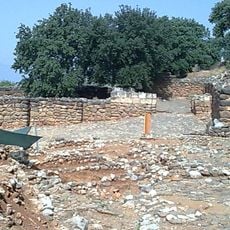
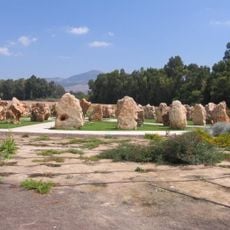
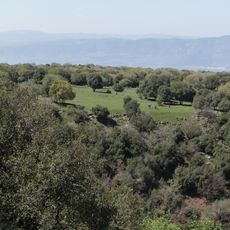
Omrit is an archaeological site in the Golan Heights containing three temple structures built one above the other from the Roman period. The temples display white marble columns and Corinthian capitals positioned on a raised platform overlooking the Hula Valley and Mount Hermon.
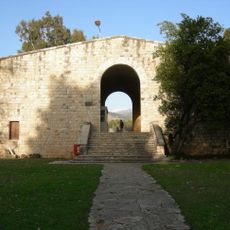
A first temple was built in the mid-1st century BCE; a second, dated to about 20 BCE, is identified with the temple Herod the Great raised near Banias for Augustus, described by Josephus. A third phase followed in the 1st century CE, and the building was renovated in the early 2nd century with Corinthian columns. The Galilee earthquake of 363 destroyed it, and a small chapel reusing its stones was built on the spot in the Byzantine period.
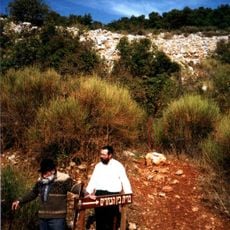
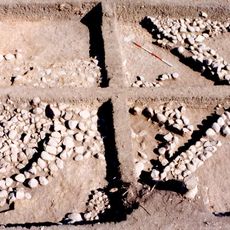
The name Omrit derives from the Arabic Khirbat ‘Umayrī, while Hebrew speakers call it Horvat Omrit. The site lies beside the tomb of Nabi Yehuda, a local landmark that visitors pass on the approach. Excavations have uncovered remains of shops and a wine press near the temple, showing that a small commercial quarter once served pilgrims and travellers on the Roman road between Scythopolis and Damascus.
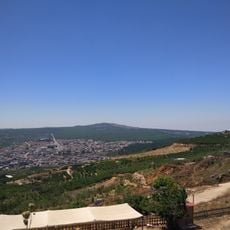
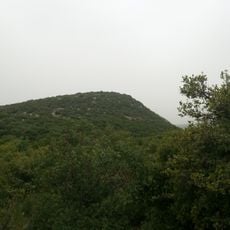
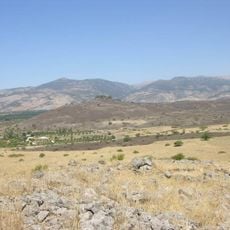
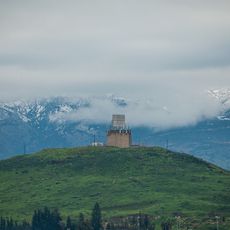
The site lies on a hilltop in the Nahal Hermon nature reserve, beside the Nabi Yehuda tomb, between Kfar Szold to the south and Shear Yashuv to the north. Excavations by Macalester College began in 1999 and are ongoing, so parts of the compound may be fenced or closed. The hill rises 159 metres and looks west over the Hula Valley; a Roman road runs just north of the ruins.
The temple's location was lost for centuries: of the four temples Herod built, this was the only one whose site remained unidentified until a wall was exposed after a brushfire in 1989. Excavations led by Andrew Overman of Macalester College began in 1999 and are still unfinished.
The community of curious travelers
AroundUs brings together thousands of curated places, local tips, and hidden gems, enriched daily by 93,789 contributors worldwide.