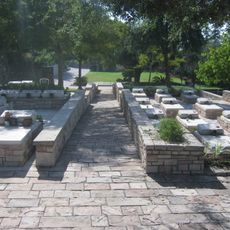
Khirbet Mehoz, Archaeological site in Western Galilee, Israel.
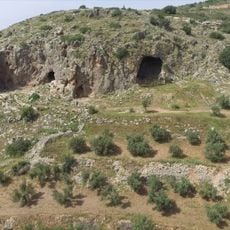
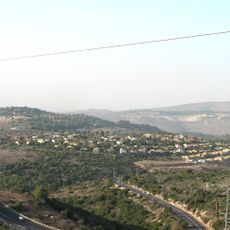
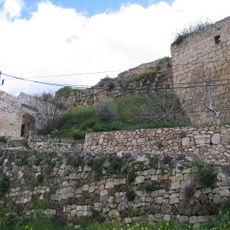
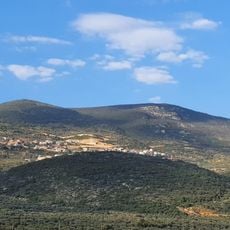
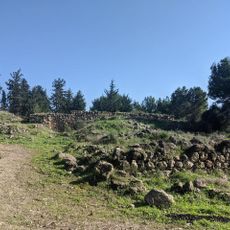
Khirbet Mehoz is an archaeological site in Western Galilee with remains of stone structures scattered across a hillside that once served as homes and work areas. The buildings and installations show how people arranged their living and working spaces to fit the natural terrain.
Khirbet Mehoz was founded in the Roman period and grew in the Byzantine period with a Christian population, becoming the main settlement of its area. It was abandoned in the early 7th century, at the Persian invasion of 614 or the Muslim conquest of 638. A Crusader document of 1230 names it "Gastina Mahuz"; after the Teutonic loss of Montfort and the defeat at Acre in 1291 they withdrew from Mehoz too. A small Muslim settlement existed under the Mamluks, and a few farmers lived in vaulted buildings over the Byzantine ruins in Ottoman times.
The Arabic name Khirbet el-Mahuz was recorded by the Teutonic Knights in a Crusader document of 1230 as "Gastina Mahuz", gastina meaning ruin. Local Muslims traditionally planted Nazareth iris, which blooms here in March beside the path below the ruins.
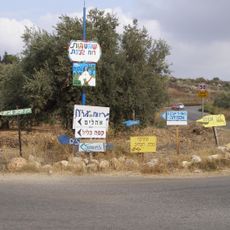
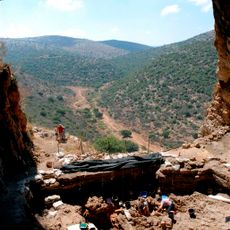
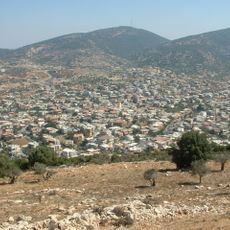
The ruins lie about 200 metres from Route 854, below Khirbet Hishik, on stony terra rossa ground with no local springs, so bring water. No excavation has been carried out, only a survey, so there are no marked trails or guides; the site is overgrown and best explored on foot with care.
At the foot of the ruins, beside the path, blooms the Nazareth iris, the only population of this species west of the watershed; it flowers in March and was probably planted by people, as Muslims plant it in cemeteries. The site also holds a 20-metre pool, half cut into rock and half built, now partly blocked, with old jujube trees growing inside it.
The community of curious travelers
AroundUs brings together thousands of curated places, local tips, and hidden gems, enriched daily by 94,225 contributors worldwide.