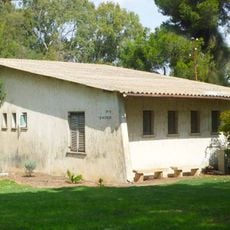
Tel Yavne, Archaeological site in Yavne, Israel
Tel Yavne is an archaeological mound of about 155 dunams in the southern coastal plain, south of the city of Yavne, bordered by Highway 42 to the west, Highway 410 to the north and the Rehovot–Ashdod railway to the south and east. Its summit holds the remains of a Crusader fortress called Ibelin, built by King Fulk of Anjou around 1140, and a Mamluk minaret with a dedication inscription dated 1337, the mound's most conspicuous feature.
After Jerusalem fell in 70 CE, Rabbi Yohanan Ben Zakkai established a center for Jewish learning here with approval from Roman Emperor Vespasian. This location became crucial for preserving Jewish tradition and knowledge after the Temple was destroyed.
The Arabic name of the mound's landmark, the Mamluk minaret, recalls the village of Yibna that stood here; its northern face carries a dedication inscription dated to 1337. The minaret was restored in 2010 by the Yavne municipality and the Israel Antiquities Authority at a cost of 417,000 shekels, with missing stones replaced and graffiti removed.
Tel Yavne lies south of Yavne, bounded by Highway 42 to the west, Highway 410 to the north and the Rehovot–Ashdod railway to the south and east. The mound covers about 155 dunams, and the Mamluk minaret stands at its top north of the mosque remains. An archaeological park has been planned for the site.
Excavations here revealed the largest ancient winery ruins of the Byzantine period discovered in the region. This finding demonstrates how central wine production was to the local economy and daily life of that era.
The community of curious travelers
AroundUs brings together thousands of curated places, local tips, and hidden gems, enriched daily by 92,733 contributors worldwide.