Madras Observatory, Astronomical observatory in Chennai, India
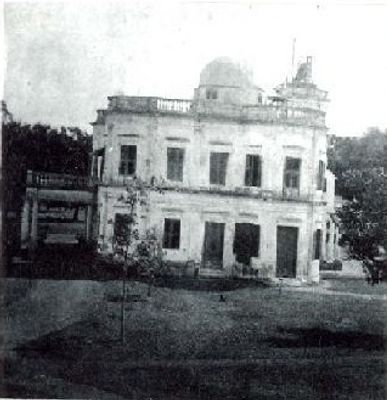
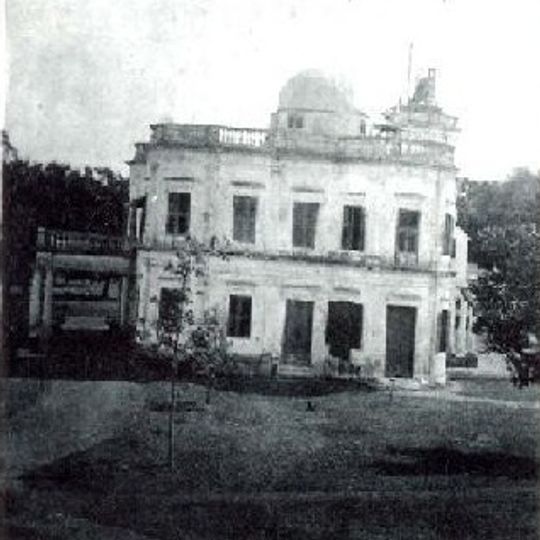
Madras Observatory was built on the bank of the Cooum at Nungambakkam to a design by Michael Topping: a single room 12 metres long, 6 metres wide and 5 metres high. At its centre a 10-ton granite pillar carried a 30-centimetre azimuth transit circle made by Troughton, used for meridian observations from 9 January 1793. The granite pillar still stands, marked with an inscription reading "Madras Meridian".
The observatory was founded at the end of the 18th century and began as a private research facility before coming under the control of a major trading company. It later became part of the broader scientific effort to map and study India's skies with more precise methods.
You can see where important celestial catalogues were created and understand the scientific work that took place here. The buildings show how people once observed the sky and what tools they needed for their studies.
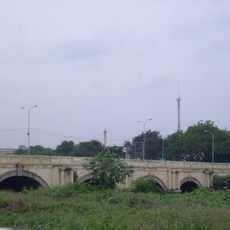
The observatory stood on the bank of the Cooum at Nungambakkam, in what is now central Chennai. The building is gone, but the 10-ton granite pillar that carried the transit circle still stands, with a later inscription marking the "Madras Meridian". Look for this pillar when walking the Nungambakkam area.
In 1855 William Stephen Jacob, in charge of the observatory, reported orbital anomalies in the binary star 70 Ophiuchi and claimed they were evidence of a possible extrasolar planet. The claim was later disproved, and the first confirmed exoplanets came 137 years later. The granite pillar that held the Troughton transit circle still stands, marked with an inscription for the "Madras Meridian".
The community of curious travelers
AroundUs brings together thousands of curated places, local tips, and hidden gems, enriched daily by 93,012 contributors worldwide.