National Gallery of Modern Art, National art museum in New Delhi, India.
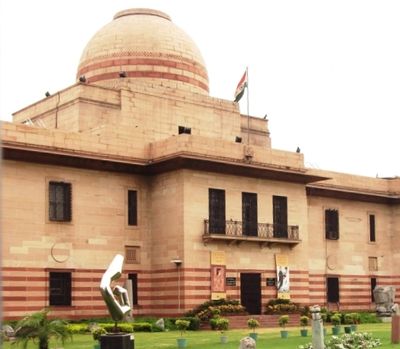
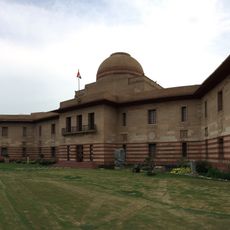
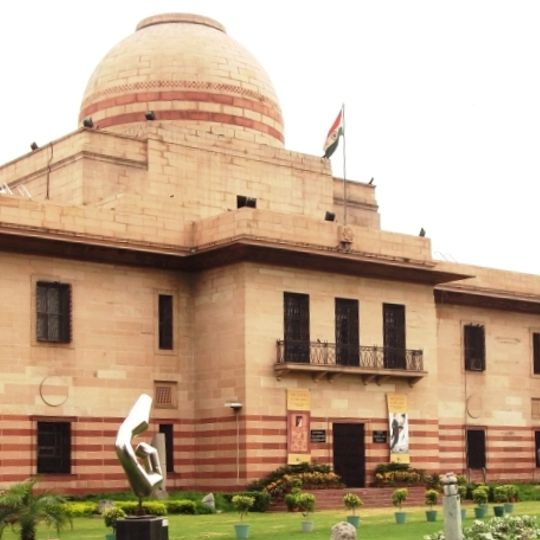
The National Gallery of Modern Art occupies Jaipur House, a butterfly-shaped building with a central dome designed by Sir Arthur Blomfield and completed in 1936. Its pale tan stone facade is banded with reddish-brown stripes, and three tall dark windows with metal railings form a balcony above the recessed entrance. A silver abstract sculpture stands on the lawn.
The Indian government founded the museum in 1954 and chose a building from the 1930s that had originally been designed for an Indian maharaja. After independence, the house was transformed into a public institution.
The gallery's holdings began with purchases of Amrita Sher-Gil's paintings: 33 bought from Egan and 33 donated by her father, Umrao Singh, alongside works by Rabindranath Tagore. Its opening show in 1954 was of Indian sculpture, with 65 pieces by 31 artists including Ram Kinkar Baij and Sankho Chaudhuri, curated by Hermann Goetz.
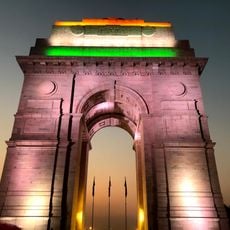
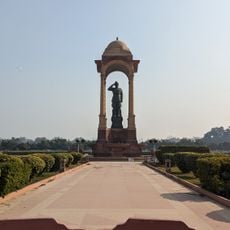
The gallery sits at the end of Rajpath in the Central Hexagon around India Gate, in the former Jaipur House. Its butterfly-shaped plan centres on a domed hall, with galleries opening off it; the Delhi branch holds 12,000 square metres of exhibition space. Allow time for the sculpture display on the lawn before entering.
Inside, documentation and research centers collect archive material and rare catalogs on modern art from India. These areas are available to scholars and interested visitors upon request.
The community of curious travelers
AroundUs brings together thousands of curated places, local tips, and hidden gems, enriched daily by 92,646 contributors worldwide.