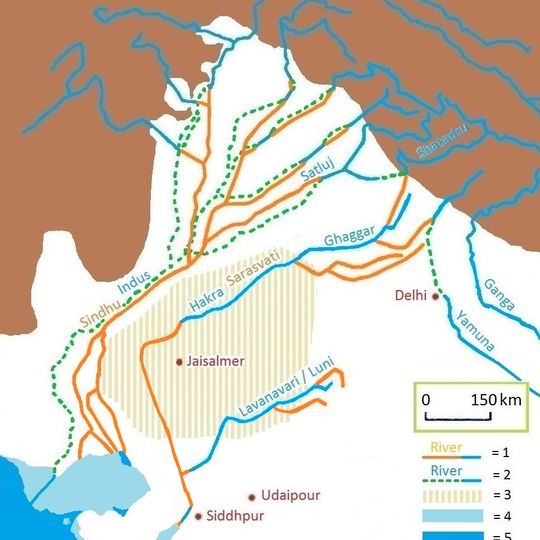
Luni River, Ancient river system in western Rajasthan, India.
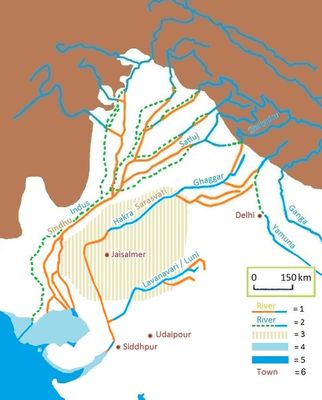
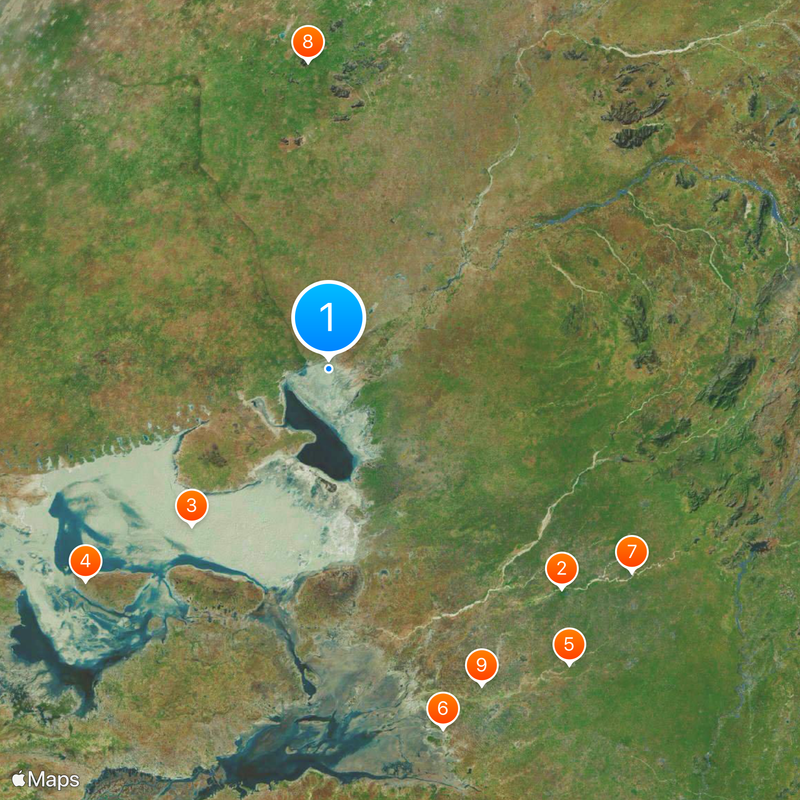
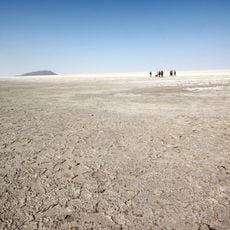
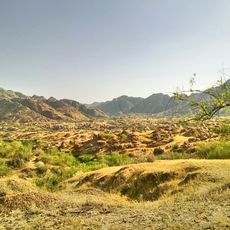
The Luni is a river in western Rajasthan that flows from the Pushkar valley through the Thar Desert to the marshlands of the Rann of Kutch, covering roughly 495 kilometers. It crosses arid landscapes and carries water that becomes increasingly salty due to mineral deposits.
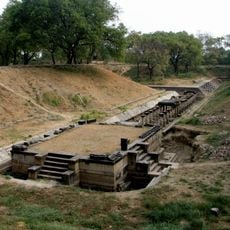
In the 19th century, Maharaja Jaswant Singh II ordered the construction of the Jaswant Sagar dam near the village of Pichiyak to harness the river water for agriculture. This project led to the development of several canals and smaller irrigation systems across the region.
The Sanskrit name lavanavari refers to the salty taste of the water, which develops from the mineral-rich soils. Fishermen and farmers have oriented their routines around the seasonal fluctuations of the flow for generations.
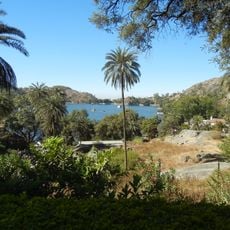
The river appears very different depending on monsoon rains, with the riverbed often showing only narrow streams during dry months. Those wishing to explore the banks will find villages and smaller access paths along the route that offer views of the landscape.
Despite rising salt concentration, 27 different fish species live in the river water, adapted to the changing conditions. Especially after the town of Balotra, the salt content increases noticeably without the ecological balance collapsing entirely.
The community of curious travelers
AroundUs brings together thousands of curated places, local tips, and hidden gems, enriched daily by 92,664 contributors worldwide.