Babughat, Heritage ghat by Hooghly River in Kolkata, India
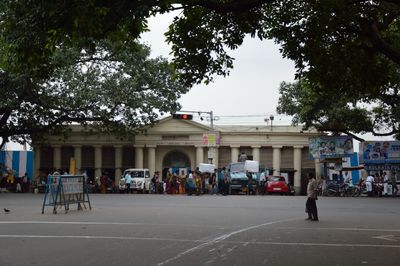
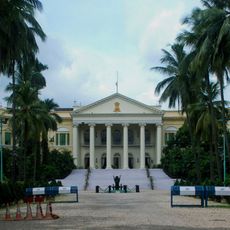
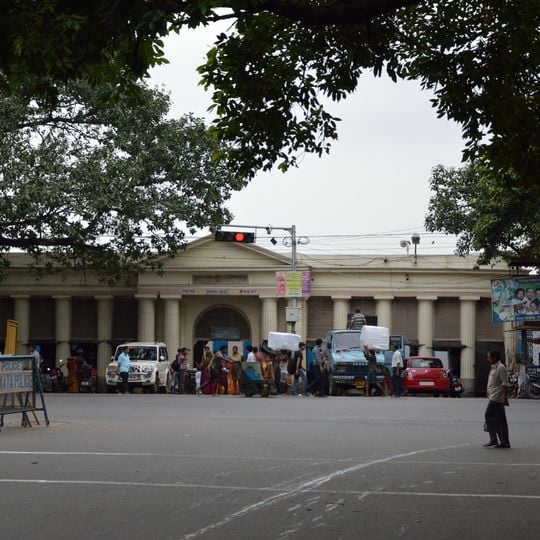
Babughat is a heritage ghat along the eastern bank of the Hooghly River in central Kolkata, featuring grand columns in Greek-Doric style supporting a pavilion structure. The architecture reflects European influence and includes broad steps leading to the water, with an attached bus terminal nearby.
Built in 1830 by Rani Rashmoni, zamindar of Janbazar, in memory of her husband Babu Raj Chandra Das, the ghat was first called Baboo Raj Chandra Ghat. A marble tablet beneath the pediment credits Lord William Bentinck, who encouraged such spending on public amenities. It is Kolkata's second oldest ghat.
The name Babughat shortens Baboo Raj Chandra Ghat, after Babu Raj Chandra Das, the Janbazar zamindar and husband of Rani Rashmoni. The pavilion is now occupied by vendors and Hindu priests, and the section once reserved for women bathers has become a garbage point. Chhat Puja draws large crowds, and idols from Durga Puja and Saraswati Puja are immersed here.
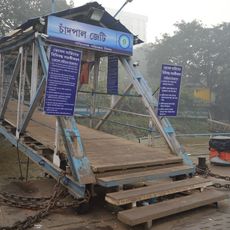
The adjoining bus terminal provides connections to surrounding regions and states, making the location easy to reach by road. The riverfront setting allows for both walking and water-based transportation.
A marble tablet beneath the pediment records that Lord William Bentinck encouraged the spending behind the ghat, as part of his push to improve public amenities. The ghat's full name, Baboo Raj Chandra Ghat, survives mainly in records; everyday use keeps only the first words.
The community of curious travelers
AroundUs brings together thousands of curated places, local tips, and hidden gems, enriched daily by 94,360 contributors worldwide.